August 20, 2026
Gun Talk Staff
There's a version of the Second Amendment story that gets told in every presidential cycle: things are about to get better, or things are about to get worse, depending on who's talking and who won. The actual record of legal change moves more slowly than the politics does — except in the years when it doesn't.
2026 is one of the years when it doesn't.
In the span of eight months, the gun rights community has accumulated a run of victories that, taken together, represent the most significant positive shift in Second Amendment law and federal gun policy since the Supreme Court decided District of Columbia v. Heller in 2008. Some of these victories are legislative. Some are executive. Most are judicial. All of them are real, documented, and consequential for the tens of millions of Americans who own firearms and believe the Second Amendment means what it says.
This is not a prediction piece. This is an accounting of confirmed wins — things that have already happened, already taken legal effect, and already changed the landscape. We are stating what the record shows, not what we hope comes next.
“Heller and Bruen are here to stay. The Court’s Second Amendment decisions have made clear that Bruen’s text-and-history approach is firmly entrenched and aimed at ensuring fidelity to the original understanding of the Second Amendment right.” — SCOTUSblog, July 21, 2026
The One Big Beautiful Bill Act, signed July 4, 2025 and effective January 1, 2026, eliminated the $200 making and transfer tax on suppressors, short-barreled rifles, short-barreled shotguns, and any other weapons (AOWs). Machine guns and destructive devices retained their $200 tax. The NFA registration process remained in place, but the $200 cost barrier — prohibitive in 1934 dollars, merely annoying in modern dollars — was gone. The practical effect was immediate: suppressor and SBR Form 4 applications surged. By June 2026, NFA checks were up 177% year over year, with 166,677 checks processed in June alone.
On his first day as confirmed ATF Director, Robert Cekada signed a 34-rule reform package that rescinded the pistol brace rule (which had reclassified millions of legally owned pistols as unregistered SBRs), eliminated the NFA tax through regulatory implementation, and initiated a broader modernization of ATF's regulatory posture — including the proposed fingerprint and photo simplification rule. The pistol brace rule had been one of the most controversial ATF regulatory actions of the modern era, affecting an estimated 10–40 million firearm configurations. Cekada additionally stated publicly in August 2026 that no one will be charged for complying with a Form 1 as long as he is running the ATF.
Judge James Wesley Hendrix issued a 66-page opinion holding that the NFA's registration and approval requirements for suppressors, SBRs, SBSs, and AOWs are unconstitutional as applied to the untaxed categories. The constitutional theory: the NFA registration apparatus was enacted to enforce tax collection. With the tax at zero, the registration requirements no longer rest on any valid enumerated power Congress invoked. The permanent injunction covers GOA members, Silencer Shop customers, PSA/SilencerCo/B&T/Hot Shots customers, and 15 plaintiff states' agencies. The DOJ allowed the seven-day stay to expire without filing an appeal. Rep. Andrew Clyde confirmed on August 12 that President Trump directed the DOJ not to appeal.
At 12:01 a.m. on August 13, 2026, GOA members Brandon Herrera and Wes Virdell completed suppressor purchases from Silencer Shop without Form 4 registration. GOA Senior VP Erich Pratt and Congressman Andrew Clyde were present. The transactions were completed under a standard 4473 and NICS background check only. Video was publicly posted. These were the first lawful transfers of an NFA item without federal registration since the National Firearms Act was signed in 1934 — 92 years. By the morning of August 13, Silencer Central had processed its first over-the-counter covered suppressor sale, with a customer walking in, selecting a suppressor, completing standard paperwork, and leaving with the suppressor — the same experience as buying a rifle.
A unanimous Fifth Circuit panel held that suppressors fall within the plain text of the Second Amendment because they facilitate armed self-defense. Judge Jerry E. Smith, writing for the panel, applied the Bruen text-and-history framework and found that suppressors are constitutionally protected arms. The panel still affirmed the conviction on other grounds, treating the federal registration scheme as a shall-issue permit system — but the constitutional holding that suppressors are protected arms is the lasting precedent. The Ninth Circuit reached the opposite conclusion in DeBorba weeks earlier, creating a clean circuit split on whether suppressors are constitutionally protected under the Second Amendment. That split makes Supreme Court review of the question a near-certainty.
The Third Circuit ruled 10-5 en banc that New Jersey's assault weapons ban and 10-round magazine limit are unconstitutional under the Second Amendment and the Bruen framework. Judge Shwartz, a Biden appointee, authored the majority opinion — which matters politically because it demonstrates the Bruen analysis transcends the ideology of the judge applying it. The mandate issued August 7 as scheduled. New Jersey filed a SCOTUS emergency stay application that remains pending; legal observers assess the odds as unfavorable to the state. The ruling created a direct circuit split with the Seventh Circuit, which upheld Illinois' assault weapons ban eight days earlier in Barnett v. Raoul.
Virginia's SB749, which banned AR-15-style rifles and other semi-automatic firearms, was enjoined at the federal district court level and the statewide injunction took effect July 21, 2026, blocking the law from enforcement across Virginia. The case, Santolla v. Katz, is ongoing in the federal courts, but the ban is currently blocked. Virginia residents who had been scrambling to comply with or challenge the law saw it frozen before it could take full effect. The Virginia ban had been one of the most aggressively contested new state gun laws of 2026.
On the final day of its 2025-2026 term, the Supreme Court granted certiorari in both Viramontes v. Cook County (Seventh Circuit, challenging Cook County's Illinois AR ban) and Grant v. Higgins (Second Circuit, challenging Connecticut's AR ban), consolidating them for a single hour of oral argument. The question presented: whether the Second and Fourteenth Amendments protect the right to possess AR-15-platform and similar semi-automatic rifles in common use. This is the first time since Heller that the Court has directly agreed to address whether commonly owned semi-automatic rifles are protected arms. A ruling will directly determine the constitutional validity of assault weapons bans in roughly twelve states plus Washington D.C.
Multiple Second Amendment cases decided in the 2025-2026 SCOTUS term confirmed that Heller's individual-rights holding and Bruen's text-and-history framework are not going anywhere. Petitions to weaken or revisit Bruen failed to attract majority support. In a concurring opinion in Hemani, Justice Jackson — joined only by Justice Sotomayor — stated she “continues to believe we veered off course in Bruen,” but that view attracted exactly two justices. The other seven are applying Bruen, not questioning it. Cooper & Kirk attorney Pete Patterson, lead counsel in several major Second Amendment cases including Bruen, wrote in SCOTUSblog on July 21 that the term's decisions made clear the text-and-history approach “is firmly entrenched.”
The combination of the NFA tax elimination (January 1) and the broader political and legal shift toward accessible suppressor ownership produced a documented market surge: NFA checks up 177% year over year, with 166,677 checks processed in June 2026 alone. The suppressor market — which had been growing steadily since 2010 — accelerated sharply when the $200 cost barrier was removed. Silencer Shop, SilencerCo, Silencer Central, and other major distributors reported record sales volumes. The population of legal suppressor owners in the United States is materially larger in 2026 than it was in 2025, and the Silencer Shop Foundation ruling will accelerate that further.
Put these ten wins in a list and you can see the shape of what happened in 2026. It is not a single event. It is a convergence — of a favorable administration, a Bruen-anchored Supreme Court, a generation of Second Amendment litigation that finally ripened at the appellate level, and a gun rights community that has been building the legal, political, and organizational infrastructure for this moment since 2008.
The NFA was enacted in 1934. For 92 years it was the unchallenged framework for regulating the most politically contested firearm accessories. In 2026, a federal court ruled portions of it unconstitutional, the DOJ declined to appeal, and Americans walked out of a Texas gun store with suppressors they had not registered with the federal government. That is a fundamental change in the American legal landscape, not a policy tweak.
The AR-15 has been banned by state after state since 1994, when the federal assault weapons ban first passed. In 2026, the Supreme Court agreed for the first time to directly address whether those bans survive the Second Amendment. An en banc federal court already said they don't. The highest court in the land is now going to have its say.
Bruen's text-and-history framework, which gun rights advocates spent years arguing would reshape Second Amendment law, has now spent four years reshaping it. The wins in 2026 are not despite Bruen — they are Bruen working as designed. A court framework that requires the government to justify firearm restrictions by pointing to a historical analog produces different results than a framework that defers to the government's safety rationale. The results are being felt in New Jersey, in Virginia, in Texas, in the NFA itself.
“After over 200 years of giving relatively little attention to the Second Amendment, Heller, McDonald, and Bruen held, respectively, that the amendment protects an individual right, that the right applies to the states, and that alleged violations are to be assessed by a text-and-history approach. The Court’s decisions this past term made clear that approach is firmly entrenched.” — SCOTUSblog, July 21, 2026
Good journalism and honest advocacy both require saying what's true even when the broader story is positive. These victories are real. They are also not final. Here is what remains genuinely uncertain:
| January 1, 2026 | One Big Beautiful Bill Act effective. NFA tax on suppressors, SBRs, SBSs, AOWs drops to $0. 177% NFA check surge begins. |
|---|---|
| April 29, 2026 | ATF Director Cekada confirmed. Signs 34-rule reform package Day One. Pistol brace rule rescinded. ATF posture shifts. |
| June 18, 2026 | Fifth Circuit (Comeaux): Suppressors are Second Amendment arms. Binding Fifth Circuit precedent. Circuit split created with Ninth Circuit (DeBorba). |
| June 30, 2026 | SCOTUS grants cert in Viramontes v. Cook County and Grant v. Higgins. First time SCOTUS directly takes up constitutionality of AR-15 bans. |
| July 17, 2026 | Third Circuit 10-5 en banc (ANJRPC v. Platkin): New Jersey AR ban and 10-round magazine limit unconstitutional. Biden appointee authors majority. |
| July 21, 2026 | Virginia SB749 statewide injunction effective. AR ban blocked across Virginia in Santolla v. Katz. |
| July 21, 2026 | SCOTUSblog publishes “Heller and Bruen Are Here to Stay” — Cooper & Kirk's Pete Patterson confirms text-and-history framework firmly entrenched after 2025-26 term. |
| August 5, 2026 | Judge Hendrix (N.D. Texas): NFA registration for untaxed categories unconstitutional. Silencer Shop Foundation v. ATF. Permanent injunction entered. First successful constitutional challenge to NFA in 92 years. |
| August 6, 2026 | ATF Director Cekada: No one will be charged for complying with a Form 1 as long as he runs the ATF. Form 1 compliance explicitly protected. |
| August 7, 2026 | Third Circuit mandate issues. NJ AR ban formally struck and unenforceable as law of the circuit. |
| August 12, 2026 | Rep. Clyde confirms Trump administration directed DOJ not to appeal Silencer Shop Foundation ruling. Seven-day stay expires. |
| August 13, 2026 | Brandon Herrera and Wes Virdell complete first unregistered suppressor transfers since 1934. Silencer Shop Leander, TX, 12:01 a.m. Silencer Central processes first walk-out suppressor purchase same morning. |
| Pending — Fall 2026 | Viramontes/Grant oral arguments at SCOTUS. Projected December 2026. Decision expected June 2027. |
| Pending — 2026–2027 | Maryland Glock ban injunction hearing. Brown v. ATF and Roberts v. ATF (parallel NFA cases). NJ SCOTUS stay application ruling. |
This is what the record shows. Not what we hope for. Not what we predict. What the record shows.
The NFA tax is gone. The NFA registration requirement for suppressors and SBRs has been ruled unconstitutional for covered parties, and the administration is not appealing. The pistol brace rule is gone. The most popular semi-automatic rifle in America is the subject of a pending SCOTUS case that the current Court's Bruen framework strongly positions in favor of the gun rights plaintiffs. A 10-5 en banc federal appellate court just struck an AR-15 ban. Virginia's AR ban is blocked. The Fifth Circuit has held that suppressors are constitutionally protected arms.
Tom Gresham has been covering the Second Amendment for over thirty years. He's covered the assault weapons ban of 1994. He covered Heller in 2008. He covered McDonald in 2010. He covered Bruen in 2022. The stretch from January 1 to August 19, 2026 is the most sustained, multi-front legal and policy progress for gun rights this country has seen in any comparable period since Heller.
The work isn't done. The wins aren't permanent until they're codified. The courts can change. But right now, today, the Second Amendment is in a stronger legal position than it has been at any point in the modern era. That is worth saying plainly, accurately, and without exaggeration. The facts say it for us.

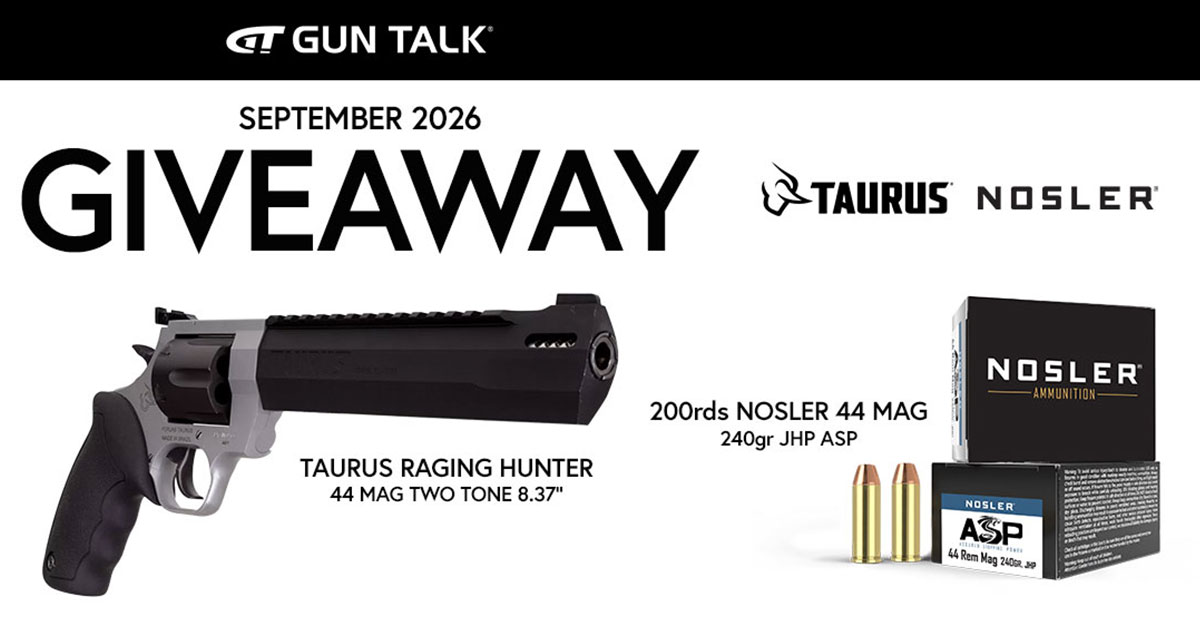
Gun Talk Giveaway
One lucky winner will bring home:
Open to U.S. residents 21+ only. Void where prohibited.