July 7, 2026
Gun Talk Staff
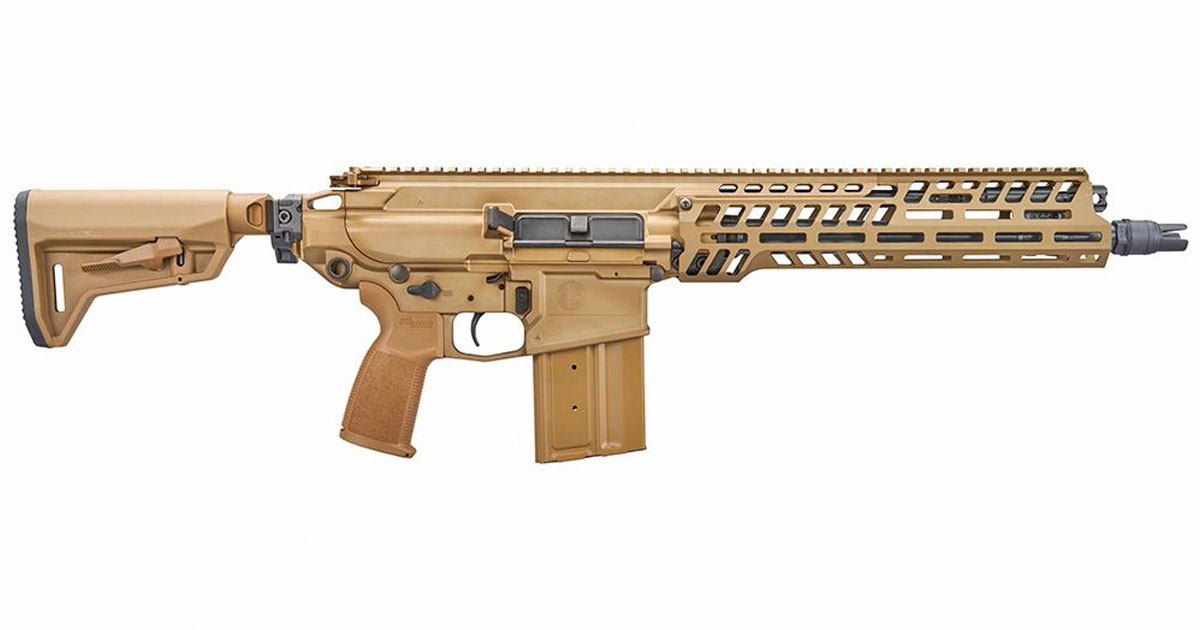
The end of an era has arrived quietly, as these things usually do. The M4A1 carbine — the rifle that defined American infantry small arms doctrine for more than 30 years, that was carried through the mountains of Afghanistan and the streets of Fallujah, that became the most widely copied military rifle design in the world — is being phased out of the U.S. Army’s Close Combat Force. Its replacement is smaller, lighter, and hits significantly harder. Its cartridge, the 6.8x51mm (.277 Fury), is the most consequential new military rifle cartridge fielded since the 5.56 NATO in 1964.
The Firearm Blog reported on the Army’s first XM8 delivery, confirming the carbine is set to replace the M4A1 for soldiers in the Close Combat Force. The Army accepted its first XM8 delivery on April 3, 2026. By fiscal year 2027, the plan calls for procurement of 14,944 XM8 carbines, 2,795 M250 automatic rifles, and 20,402 M157 advanced fire control systems — but zero additional M7 rifles. The M7 is being shifted to National Guard units or a designated marksman role. The XM8 is the future of U.S. Army small arms.
For the civilian firearms community — particularly hunters, competitive shooters, and those who follow the SIG Sauer MCX-SPEAR platform that underlies the entire NGSW family — this development has practical and commercial implications worth understanding.
The Next Generation Squad Weapon program began in earnest in 2019, when the Army put out requirements for a rifle and automatic rifle that could defeat emerging threats — specifically, body armor that 5.56mm NATO was increasingly unable to reliably penetrate at standard engagement distances. The requirement was driven by intelligence assessments of near-peer adversary armor proliferation and the tactical reality that the 5.56mm was approaching the limits of its developmental ceiling.
SIG Sauer won the NGSW contract in April 2022 with its MCX-SPEAR rifle in a proprietary 6.8x51mm composite case cartridge — designated .277 Fury commercially. The M7 rifle (the military designation for the MCX-SPEAR) was paired with the M250 automatic rifle and the M157 fire control system, an integrated optic combining a 1-8x direct view optic, laser rangefinder, ballistic solver, environmental sensors, and intra-soldier wireless communications. Initial fielding to the 101st Airborne Division began March 2024.
Field feedback from soldiers was consistent: the M7 is accurate, hard-hitting, and paired with a revolutionary fire control system. It is also heavy, and its 13.5-inch barrel — longer than the M4’s 14.5 inches in a package that is actually shorter overall due to different gas system geometry — was unwieldy for close-quarters environments. Soldiers wanted something shorter and lighter for the same role the M4 had always served: urban combat, vehicle dismounts, and close-in fighting.
SIG Sauer had anticipated this. The company began developing a carbine variant of the M7 almost simultaneously with the original M7 program, without a specific Army contract to do so. When the Army formalized its requirement for a shorter platform, SIG’s work was ready. The carbine was designated XM8 in March 2026. The first deliveries followed on April 3, 2026 — a milestone The Firearm Blog covered in detail, including confirmation that the delivery order included essential accessories, spare parts, and contractor support alongside the carbines themselves.
| Spec | M7 Rifle | XM8 Carbine |
|---|---|---|
| Barrel length | 13.5 in. (343 mm) | 10.5 in. (267 mm) |
| Overall length | ~37 in. w/ suppressor | ~32.8 in. w/ suppressor (4.2 in. shorter) |
| Weight (bare) | 8.3 lbs. | 7.3 lbs. (1 lb. lighter) |
| Muzzle velocity | ~3,000 fps | ~2,800–2,900 fps (100–200 fps loss) |
| Caliber | 6.8x51mm (.277 Fury) | 6.8x51mm (.277 Fury) |
| Gas system | Piston-driven | Piston-driven (same) |
| Fire control | M157 optic compatible | M157 optic compatible (same) |
| Stock | Side-folding | Fixed telescoping (M4-style — soldier feedback) |
| Suppressor | 7 in. (1.87 lbs.) | 6 in. reduced-length w/ heat shield (1.31 lbs.) |
| Magazines | Standard 20-round SR-25 | New 25-round as standard (production underway) |
| Handguard | Free-float M-LOK | Stiffer handguard for optics stability |
| Status | Being shifted to NG/DMR | Primary NGSW-R going forward |
| FY2027 procurement | 0 (no new M7s ordered) | 14,944 XM8 carbines ordered |
The velocity loss from the shorter barrel — approximately 100 to 200 fps at the muzzle — was a deliberate trade the Army and SIG accepted. The XM8 still maintains muzzle velocities of approximately 2,800 to 2,900 fps, which SIG confirms remains in excess of the Army’s ballistic and armor penetration requirements. The 6.8x51mm cartridge was designed with significant headroom above 5.56 NATO’s performance envelope; the velocity reduction from the shorter barrel still leaves it operating well above the thresholds that drove the NGSW program in the first place.
The fixed stock decision came directly from soldier feedback during the Soldier Touch Point evaluation at Fort Benning in September 2025. Troops found the M7’s folding stock “not as robust” as a fixed design and preferred the familiar feel of an M4-style telescoping stock for rapid shoulder presentation. The Army listened. The XM8 has a fixed telescoping collapsible stock instead.
The M4A1 served longer than the M1 Garand. Longer than the M1 Carbine. Longer than the M14. The AR-15/M16/M4 family has been the backbone of U.S. small arms doctrine for 60 years, a tenure that reflects both the design’s genuine utility and the institutional friction of major procurement transitions. The XM8 doesn’t just replace a specific rifle. It replaces a caliber — 5.56x45mm NATO — that has defined American military rifle design since 1964.
This is not a routine product improvement. The last time the U.S. Army conducted a rifle-plus-caliber transition of this magnitude, Dwight Eisenhower was president. The 6.8x51mm ecosystem — rifle, automatic rifle, ammunition, fire control — represents a generational shift in how the Army thinks about squad-level lethality and engagement range.
Here is where the story gets directly relevant to civilian shooters. The SIG MCX-SPEAR — the commercial semi-automatic version of the M7 — has been available since 2022 and is chambered in .277 Fury. It is currently the only commercially available semi-automatic rifle in that caliber from a major manufacturer, though additional manufacturers have been evaluating the platform.
Military adoption at scale has historically done one of two things to the commercial ammunition market: it either drives prices down through manufacturing volume, or it creates scarcity through military procurement priority. In the near term, the latter is more likely — the Army’s appetite for 6.8x51mm ammunition is substantial. Federal FY2027 budget documents show continued investment in the NGSW ammunition supply chain. Civilian .277 Fury shooters should expect supply constraints to persist through at least 2027 as military procurement scales.
The longer-term picture is more favorable. As military production matures and the ammunition supply chain expands, civilian .277 Fury pricing should stabilize. The cartridge has genuine hunting applications — its energy and trajectory make it a legitimate elk and large deer cartridge at distances the 5.56 never approached. And the MCX-SPEAR platform, already in civilian hands, will benefit from the sustained military development investment that accompanies long-term procurement programs.
“The Army hasn’t procured a single new M7 rifle in Federal FY2026. The future of NGSW-R production is the XM8. The M4 era is over in the U.S. Army’s Close Combat Force.”
For civilian shooters who want to run the same cartridge the U.S. Army is fielding, the SIG Sauer MCX-SPEAR is the primary platform. Chambered in .277 Fury, semi-automatic only, it is a direct civilian analog of the M7 in both operating mechanism and caliber. MSRP runs approximately $7,999 — a premium that reflects both the platform’s engineering and its limited commercial production volume relative to the AR-15 ecosystem.
The commercial implications of the XM8 transition for MCX-SPEAR owners are mixed. On one hand, sustained military investment in the 6.8x51mm cartridge and the piston-driven MCX operating system creates long-term development momentum that benefits civilian platform owners. On the other, the military’s appetite for ammunition may constrain civilian supply in the near term.
For hunters specifically, the .277 Fury’s ballistic profile is genuinely compelling. Driving a 150-grain bullet at approximately 2,800 fps from a 16-inch barrel, the cartridge delivers excellent long-range trajectory and terminal performance on elk, mule deer, and other large game at distances that challenge the 6.5 Creedmoor’s energy envelope. The tradeoff is ammunition cost — currently $3-5 per round for commercial loads — and platform cost relative to comparable bolt-action alternatives.
The Army’s NGSW product improvement roadmap, outlined in FY2027 budget documents, includes several developments worth tracking:
| Jan. 2019 | Army begins NGSW program to replace M4 and M249 for close combat forces |
|---|---|
| Apr. 2022 | SIG Sauer awarded NGSW contract. M7 rifle and M250 automatic rifle designated. |
| 2022 | SIG MCX-SPEAR (.277 Fury) commercial semi-auto version released to civilian market. MSRP ~$7,999. |
| Mar. 2024 | 101st Airborne Division begins fielding M7 rifles. NGSW enters operational service. |
| Jan. 2026 | 25th Infantry Division fielded with M7 rifles. |
| Mar. 16, 2026 | Army designates M7 carbine variant as XM8. National Stock Number 1005-01-737-3402 assigned. |
| Apr. 3, 2026 | U.S. Army accepts first XM8 carbine delivery from SIG Sauer. |
| FY2026 | Zero new M7 rifles procured. M7 production effectively ended. |
| FY2027 | Army plans: 14,944 XM8 carbines │ 2,795 M250s │ 20,402 M157 fire control systems │ 0 M7 rifles. |
| TBD | 25-round magazines, lighter ammunition, alternate optics, and M157 network enhancements in development. |
| TBD | M7 rifles in service likely shifted to National Guard units or designated marksman roles. |
The XM8 carbine is not a product improvement. It is the completion of a generational transition that began when the Army decided 5.56mm NATO had reached its ceiling as a military cartridge and that defeating near-peer adversary body armor required a new approach to squad-level lethality. Four years after the NGSW contract was awarded, the Army has its carbine, has essentially ended M7 production in favor of it, and is scaling the 6.8x51mm ecosystem in ways that will define American infantry small arms doctrine for the next generation.
For the civilian shooting community, the story is one of long-term opportunity with near-term patience required. The .277 Fury is a genuinely excellent cartridge for hunting and long-range shooting, the MCX-SPEAR is a capable platform, and the military’s sustained investment in the ecosystem will eventually benefit civilian availability and pricing. But that timeline is measured in years, not months.
The M4 era served America well for 30 years. Its replacement — a shorter, lighter rifle chambered in a cartridge designed specifically to overmatch the threats the M4 couldn’t reliably defeat — is in the hands of American soldiers right now. That is a story worth paying attention to, whether you are a defense policy watcher, a civilian MCX-SPEAR owner, or simply someone who cares about the firearms that protect American service members.

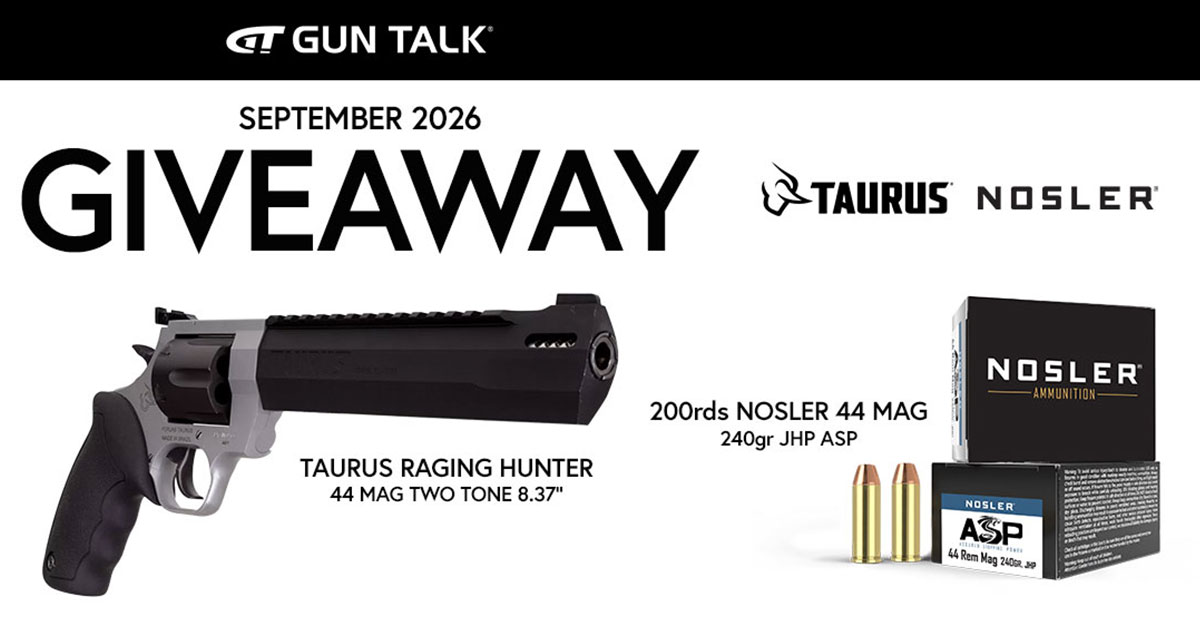
Gun Talk Giveaway
One lucky winner will bring home:
Open to U.S. residents 21+ only. Void where prohibited.