September 14, 2026
Gun Talk Staff
The Silencer Shop Foundation v. ATF ruling of August 5, 2026 changed the federal landscape for suppressors, SBRs, and SBSs permanently for covered parties. For those unfamiliar: the Northern District of Texas issued a final judgment permanently barring enforcement of the NFA registration, transfer, and identification requirements for those items as to parties covered by the injunction. For covered parties, acquiring a suppressor is now a standard 4473 + NICS transaction. No Form 4. No wait. No $200 tax — that was already $0 since January 1.
Here is the problem the Michigan bills are designed to solve. Michigan law, under MCL 750.224(1)(b), independently bans possession of suppressors with felony penalties of up to five years. Michigan law under MCL 750.224b independently bans SBRs and SBSs with the same five-year felony exposure. Both statutes carve out exceptions for items that comply with federal law — but those exceptions are written around a federal registration process that the court has now blocked.
The result is a legal trap. A Michigan gun owner who is a covered party under the Silencer Shop Foundation injunction, and who acquires a suppressor through a standard 4473 + NICS transaction without federal paperwork, is complying with federal law as it now stands for covered parties. That same person may simultaneously be violating MCL 750.224(1)(b) because their suppressor does not have the federal paperwork that Michigan's state exception requires. Federal legality and state felony exposure are coexisting for the same transaction.
“Here is the trap: a Michigan gun owner could follow the new federal reality and still violate outdated state law. Michigan law is tied directly to the federal registry — if you don't have federal paperwork, you're breaking state law.” — Great Lakes Gun Rights, August 2026
This is not a hypothetical risk. Michigan law enforcement officers who encounter someone with a suppressor or SBR will apply Michigan state law, not a Northern District of Texas injunction. The injunction does not bind Michigan law enforcement. The injunction does not bind the Michigan Attorney General. It binds federal ATF agents and certain identified defendants. A Michigan resident who relies solely on covered-party status under the federal injunction and acquires a suppressor without Form 4 paperwork is not protected from Michigan state prosecution.
HB 6285, introduced by Rep. James DeSana (R-Carleton), is the substantive bill. It amends three sections of Michigan's 1931 Penal Code:
The practical effect of HB 6285 if passed: Michigan law no longer independently prohibits suppressors, SBRs, or SBSs. Michigan residents would be subject only to federal law — which currently, for covered parties, does not require registration, transfer paperwork, or the $200 tax (already $0). For non-covered parties, federal Form 4 at $0 cost remains the process.
HB 6284, introduced by Rep. Mike Hoadley, is the companion bill that updates Michigan's sentencing guidelines to remove references to the suppressors, SBRs, and SBSs that HB 6285 is decriminalizing. Sentencing guideline statutes reference the underlying criminal provisions; when the underlying provision is repealed, the guidelines need corresponding cleanup to avoid orphan references that could create interpretive confusion.
The two bills are tied by a tie-bar provision, which means neither takes effect without the other. The legislature must pass both or neither. This is standard practice for paired legislation where one bill creates substantive changes and the companion cleans up downstream references.
Michigan is not unique in having state-level suppressor and SBR restrictions that piggyback on federal NFA compliance. As of August 2026, several states maintain independent state restrictions on suppressors, SBRs, and SBSs that are written around the federal registration process. Those state restrictions did not disappear when the Silencer Shop Foundation ruling changed federal enforcement. They remain in effect under state law and can be enforced by state law enforcement regardless of federal court orders binding only federal agencies.
The states most directly affected are those whose suppressor or SBR laws, like Michigan's, create exceptions specifically for items that comply with the federal NFA process. When the federal NFA process is enjoined for a class of covered parties, those exceptions become ambiguous or inapplicable, depending on how state courts interpret them. The safest legal path for residents of those states is the same as for Michigan: file federal paperwork, even at $0 cost, to satisfy the state exception until the state legislature acts.
Michigan's HB 6284 and HB 6285 represent the first state legislative response to that problem. CAT Outdoors described them as likely the first state legislation moved in direct answer to the injunction, noting that Michigan won't stay alone and that every state whose suppressor or SBR statutes piggyback on NFA compliance woke up August 13 with the same gap. The bills' introduction in Michigan should serve as a signal to gun owners in other states with similar statutes: check your state law before acting on federal covered-party status.
The immediate requirement is a Judiciary Committee hearing. Bills introduced in Michigan go to the relevant committee, and without a hearing they cannot advance. The Michigan House returned from summer recess September 1. The House Republican caucus that introduced these bills has the ability to schedule a hearing — the question is whether leadership prioritizes it in the fall session calendar alongside appropriations and other scheduled business.
Gun owners who want to see these bills move should contact their Michigan House representative and the House Judiciary Committee directly. The Michigan Legislature's official bill tracker lists current committee assignment and contact information for both HB 6284 and HB 6285.
If the Judiciary Committee schedules a hearing and advances the bills, they would proceed to the full House for a floor vote. Michigan's House has a Republican majority. The bills were introduced by Republicans. Passage through the House is plausible if the bills receive a hearing.
The Senate would need to act subsequently — either by taking up the House bills or advancing its own SB 1150/1151 companions. Michigan's Senate also has a Republican majority. Senate action on a bill that has already passed the House with support on a straightforward preemption/alignment question is possible in the current session.
Michigan's Governor Gretchen Whitmer (D) would need to sign the bills into law. Governor Whitmer has not made public statements on HB 6284 or HB 6285 as of September 14. A Democratic governor signing bills that repeal state-level suppressor and SBR prohibitions is not a certainty. The political dynamics here are worth monitoring — the bills are framed as a state-law alignment measure correcting a conflict created by a federal court ruling, not as an expansion of gun rights per se. Whether that framing is persuasive to the Governor's office is an open question.
The advice is straightforward and the same as it was before HB 6284 and HB 6285 were introduced:
| HB 6285 | Substantive repeal: amends MCL 750.222, 750.224, 750.231 and repeals MCL 750.224b │ Sponsor: Rep. James DeSana, R-Carleton |
|---|---|
| HB 6284 | Sentencing guidelines cleanup companion bill │ Sponsor: Rep. Mike Hoadley │ Tied to HB 6285 by tie-bar provision |
| Senate companions | SB 1150 & SB 1151 │ Sponsor: Sen. Jonathan Lindsey │ Same repeal, Senate track |
| Introduced | August 27, 2026 │ Electronically reproduced September 1, 2026 |
| Current status | Referred to Michigan House Judiciary Committee │ No hearing scheduled as of September 14, 2026 |
| What MCL 750.224b does | Makes possession/manufacture of SBRs and SBSs a five-year felony with exception for federally compliant items |
| What MCL 750.224(1)(b) does | Independently bans suppressors as prohibited weapons │ Also five-year felony with federal compliance exception |
| What repealing both does | Eliminates Michigan's independent state-level prohibitions │ Michigan residents subject to federal law only |
| Tie-bar provision | Both bills must pass or neither takes effect │ Standard paired legislation procedure |
| Governor | Gov. Gretchen Whitmer (D) must sign │ No public statement on bills as of September 14 |
| Michigan Legislature | Republican House majority │ Republican Senate majority │ Bills introduced by Republicans |
| Bill tracker | legislature.mi.gov — Search HB 6284 and HB 6285 |
| Related federal law | Silencer Shop Foundation v. ATF (N.D. Tex.) — Final judgment August 5, 2026 │ NFA registration enjoined for covered parties |
Michigan's HB 6284 and HB 6285 are the right fix to a real problem created when a federal court ruling changed the landscape faster than state legislatures could respond. The Silencer Shop Foundation ruling did not touch Michigan state law. It touched only federal enforcement. Michigan gun owners who fail to understand that distinction face a five-year felony under a statute that their state legislature has not yet updated.
The bills are in Judiciary. They have no hearing date. Legislative calendars are unpredictable. Do not wait for the bills to pass before acquiring a suppressor or SBR. File a Form 4 or Form 1 at $0 cost, take your six-day median approval, and get federal paperwork that satisfies Michigan's current state law exception. When HB 6284 and HB 6285 pass — if they pass — that paperwork will no longer be required. Until they do, it protects you from a five-year state felony.
Gun Talk Media will cover any hearing date, committee vote, or floor action on HB 6284 and HB 6285 as it develops. Monitor Great Lakes Gun Rights and Michigan House Republicans for updates. This is a story that is moving — it just hasn't moved yet.
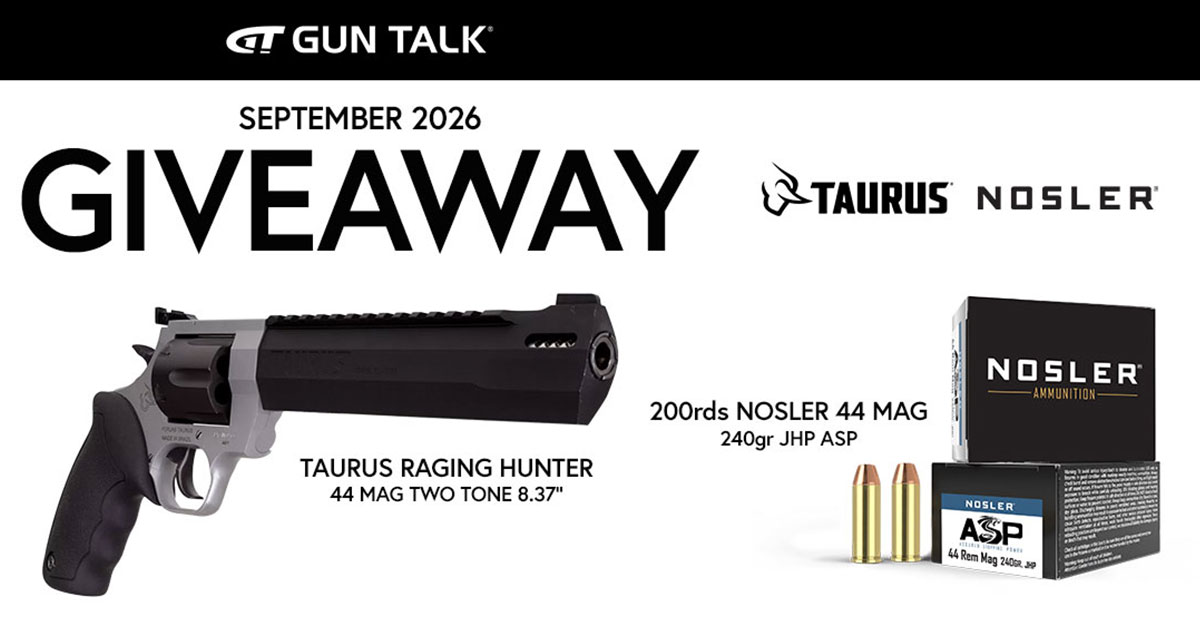
Gun Talk Giveaway
One lucky winner will bring home:
Open to U.S. residents 21+ only. Void where prohibited.

