June 16, 2026
When a civilian ammunition technology earns a U.S. Army licensing agreement, it tends to mean one of two things: either the military is catching up to what the commercial market already figured out, or a technology has proven itself so definitively that the most demanding customer in the world decided it needed it. In the case of Federal Ammunition’s Peak Alloy case technology, the answer is both.
Federal announced May 27, 2026, that it has signed an agreement with the United States Army allowing the military to utilize its patented Peak Alloy ammunition case technology across multiple cartridges and weapon systems — all chamberings at .50-caliber and below. The agreement, announced just days before Federal launched the 6.5 Creedmoor +Peak Terminal Ascent for civilian hunters and precision shooters, is one of the most significant developments in American ammunition technology in decades.
For the hunting and shooting community, the implications run far deeper than a Pentagon procurement headline. This agreement signals that Peak Alloy is not a niche commercial product or a marketing exercise. It is a technology platform validated by the most rigorous testing standards on earth, now running on parallel tracks — military procurement and civilian product expansion — simultaneously.
The May 27 announcement from Federal Ammunition’s Anoka, Minn., headquarters was deliberate in its language and specific in its structure. This is not a standard government ammunition supply contract — those are transactional. This is a technology licensing agreement, which is a fundamentally different and more consequential document.
Under the terms, Federal must deliver 40 million Peak Alloy cases before the Army acquires full Government Purpose Rights — the point at which the government can use the technology without restriction for military applications. That milestone ties the Army’s unrestricted licensing of the patent to demonstrated manufacturing capacity at Federal’s Minnesota facilities. It is, in effect, a performance-based technology transfer that rewards Federal for proving it can produce the technology at scale before the government takes full possession of the rights.
The agreement is separate from a five-year, $114 million U.S. Army contract Federal received in 2025 to produce MK311 MOD 3 frangible 5.56 NATO training ammunition. That deal covered an established product line. The Peak Alloy agreement covers novel case technology rights for programs still in development — a forward-looking document, not a maintenance contract.
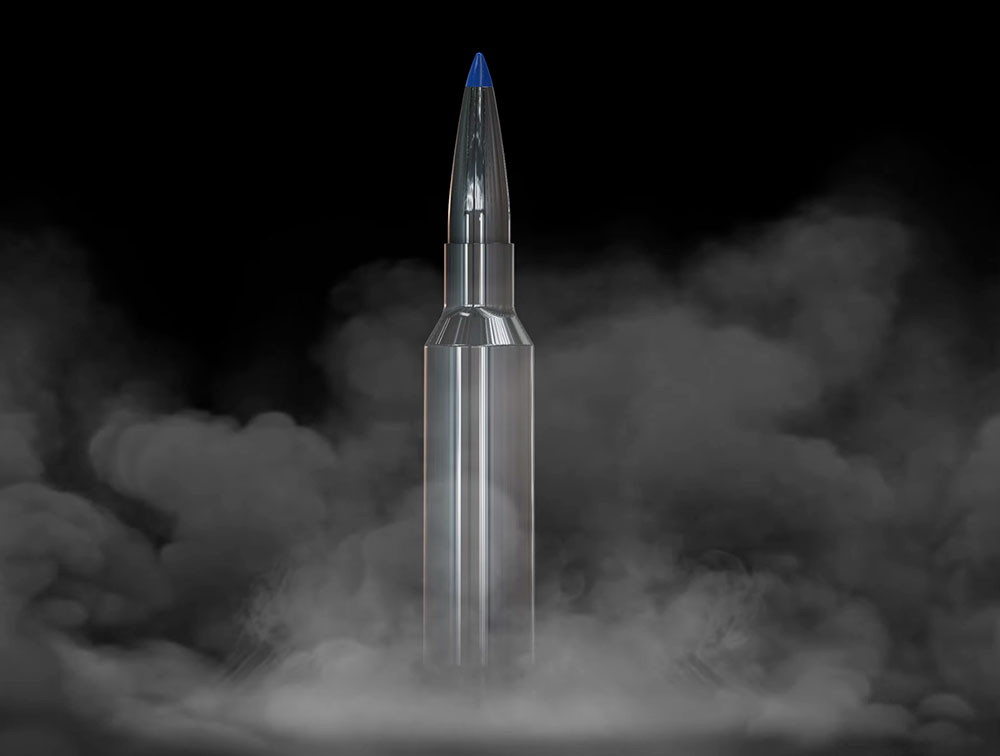
Peak Alloy is Federal’s proprietary high-strength steel alloy case material, first introduced commercially in 2025 with the 7mm Backcountry cartridge. The core value proposition is straightforward: it handles significantly higher chamber pressure than traditional brass — in excess of 80,000 PSI compared to the 55,000 to 65,000 PSI that conventional brass cases sustain before reliability degrades.
That pressure differential is not abstract engineering. It is the direct source of every performance advantage Peak Alloy delivers. Higher sustainable pressure means more propellant can be burned more efficiently, which translates to higher muzzle velocity from the same barrel length — or equivalent muzzle velocity from a shorter, lighter, more compact barrel. In an era when military rifle design trends heavily toward shorter, suppressor-configured platforms that maintain ballistic performance in smaller packages, Peak Alloy addresses a fundamental constraint that brass has always imposed.
"Higher pressure ceiling means more velocity from shorter barrels. For a military that has been moving toward compact, suppressed platforms for two decades, that is not a marginal benefit. It is a decisive one."
The external dimensions of a Peak Alloy case are identical to its brass equivalent. A Peak Alloy 6.5 Creedmoor case is the same external geometry as a standard 6.5 Creedmoor brass case. This means the technology deploys in existing chambered weapons without modification — an operationally critical characteristic for any military adoption. You do not re-barrel a fleet of service rifles to use Peak Alloy ammunition. You simply load Peak Alloy instead of brass.
For military applications specifically, the case material also addresses durability and consistency concerns that have historically made steel-cased ammunition a second-tier option. Traditional imported steel-case ammunition — the lacquer-coated Russian and Eastern European varieties familiar to American range shooters — has long carried a reputation for extraction issues, accelerated chamber wear, and dimensional inconsistency. Federal’s proprietary Peak Alloy formulation and manufacturing process addresses these concerns at a fundamentally different level of engineering precision. This is not Tula ammunition. It is a purpose-engineered American technology platform built to military specification standards.
The U.S. military has been moving toward shorter, more compact rifle platforms for years. The M4 carbine’s 14.5-inch barrel represented the first major step away from the M16’s 20-inch profile. More recently, the Close Quarter Combat Receiver (CQCR) and similar programs have pushed barrel lengths even shorter for specialized applications. The consistent trade-off has been velocity — every inch of barrel lost costs muzzle velocity, which costs effective range and terminal performance.
Peak Alloy’s higher pressure ceiling partially offsets that trade-off. A shorter barrel running Peak Alloy ammunition recovers velocity that would otherwise require a longer barrel to achieve. In practical terms, this means compact, suppressor-configured military rifles can maintain ballistic performance that previously required full-length barrels — a capability the Army has been pursuing through multiple programs and cartridge development efforts.
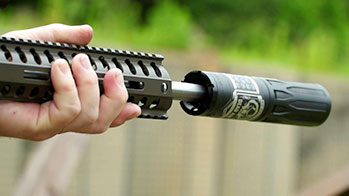
Federal explicitly developed Peak Alloy with suppressor-configured rifles in mind. The same characteristics that make it attractive for civilian hunters running short suppressed bolt guns — higher velocity from compact barrels, consistent chamber pressure for reliable cycling — apply directly to military suppressed rifle programs. As the Army’s suppressor integration programs have accelerated under recent force modernization efforts, the demand for ammunition optimized for suppressed, short-barreled platforms has grown accordingly. Peak Alloy answers that demand.
Federal’s announcement noted that Peak Alloy technology is also being evaluated by multiple allied European countries. That detail is worth more attention than the headline numbers. NATO standardization requirements mean that if Peak Alloy-based loads are formally adopted by the U.S. military in standard NATO chamberings — particularly 5.56x45mm and 7.62x51mm — allied nations operating on NATO ammunition standards have strong institutional incentives to evaluate compatible ammunition. A technology that begins as a civilian commercial product and migrates to U.S. military adoption and then NATO evaluation is a technology on a trajectory that changes the global ammunition industry.
Government ammunition procurement contracts at scale have historically done something predictable for the civilian ammunition market: they drive down per-unit manufacturing costs. The tooling, workforce training, quality control infrastructure, and raw material supply chains required to fulfill a 40-million-case government milestone represent a substantial manufacturing investment. Once that investment is made, the marginal cost of producing additional cases for the civilian market declines.
For civilian hunters and competitive shooters, this is the most practically significant long-term implication of the Army agreement. Federal Premium’s +Peak civilian loads are currently priced at a premium reflective of new technology — approximately $60 to $79 per 20-round box for the 6.5 Creedmoor Terminal Ascent. As military production milestones drive manufacturing efficiency, that civilian price ceiling has room to come down meaningfully. The technology becomes more accessible as the military contract scales Federal’s production infrastructure.
Federal CEO Jason Vanderbrink has said publicly that Peak Alloy will change the landscape of high-performance rifle ammunition, and the Army agreement provides the institutional confirmation that the technology platform is being built for the long term. Military cartridge programs operate on multi-year or multi-decade timelines. Federal does not license a technology to the Army and then abandon the commercial product line that validates it. The Army agreement is effectively a roadmap signal: Federal is investing in Peak Alloy manufacturing infrastructure at a scale that demands a broad product expansion to justify it.
For civilian shooters, that means the 6.5 Creedmoor and 7mm Backcountry are the beginning of the Peak Alloy commercial lineup, not the end. The .308 Winchester — the most widely owned precision rifle cartridge in America — is the obvious next candidate. The 6mm Creedmoor, the .300 Winchester Magnum, and potentially smaller precision cartridges follow. Each represents the same equation: millions of existing rifles given a dramatic performance upgrade without a new firearm purchase.
The Army doesn’t license a technology on a whim. When the military validates a commercial ammunition innovation at this level, the commercial product roadmap tends to follow the money. More Peak Alloy cartridges are coming. Count on it."
The Army agreement raises an interesting question for the handloading community that Federal has not yet fully answered: what does military-scale Peak Alloy production mean for civilian access to unprimed Peak Alloy cases? Federal has announced plans to offer first-run unprimed cases for civilian handloaders, but the timing and volume of that release remain undefined. Military procurement priorities will influence how much case production capacity is directed toward government versus civilian channels in the near term.
The handloading data question is equally significant. Lee Precision has already confirmed it is developing dies compatible with Peak Alloy cases, which signals that the handloading supply chain is moving to accommodate the technology. Whether Peak Alloy cases can be reloaded comparably to brass — steel’s traditional reputation for single-use military loading notwithstanding — is something the precision handloading community will sort out empirically once cases are available.
2025
Peak Alloy debuts commercially in the 7mm Backcountry cartridge. Silver case draws immediate attention at launch. Civilian shooters begin testing and reviewing.
2025
Federal receives separate $114 million U.S. Army contract for MK311 MOD 3 frangible 5.56 NATO training ammunition — establishes Federal as active military supplier.
May 27, 2026
Federal signs Peak Alloy technology licensing agreement with U.S. Army. Covers multiple chamberings .50-cal and below. 40-million-case delivery milestone required before Government Purpose Rights granted.
June 5, 2026
Federal launches 6.5 Creedmoor +Peak commercial ammunition lineup. Lead product: 130-grain Terminal Ascent. Shipping to dealers August 2026.
June 2026
European allied nations confirmed evaluating Peak Alloy technology. NATO standardization implications emerge.
August 2026
6.5 Creedmoor +Peak Terminal Ascent ships to dealers. Gold Medal 153-grain Sierra TMK match load to follow.
TBD
Unprimed Peak Alloy cases for civilian handloaders. Lee Precision dies in development. Additional commercial cartridge expansions anticipated.
TBD
Additional Peak Alloy commercial cartridge launches expected. .308 Winchester widely anticipated as next candidate.
Federal Ammunition was founded in 1922 in Anoka, Minn. For more than a century, the company has been one of the pillars of American ammunition manufacturing, producing everything from .22 LR plinking rounds to match-grade Gold Medal precision loads to military-contract training ammunition. It has never been a company that made headlines for revolutionary technology.
Peak Alloy changed that. In roughly two years, Federal has moved a novel case material technology from commercial introduction to U.S. Army licensing agreement to allied nation evaluation — a timeline that is, by the standards of either commercial ammunition development or military procurement, remarkably compressed. The technology works. The Army’s willingness to sign a licensing agreement rather than simply purchase ammunition off existing contracts is institutional confirmation of that.
For the American shooting community, the most important takeaway is not the Army contract itself — it is what the Army contract signals about the commercial roadmap. Federal is not building Peak Alloy manufacturing infrastructure for a single cartridge or a single customer. The 40-million-case delivery milestone alone represents a manufacturing commitment that demands commercial product expansion to keep the production lines justified.
The question is no longer whether Peak Alloy changes the civilian ammunition market. It already has. The question is how quickly the technology expands across cartridges and price points. If the Army agreement accelerates Federal’s manufacturing investment — and there is every reason to believe it will — the pace of that expansion just got faster.
For Gun Talk readers who have been asking since our Federal +Peak coverage dropped: yes, this is that big. The Army agreement is not a footnote to the 6.5 Creedmoor story. The 6.5 Creedmoor launch is the opening chapter of a much longer story that the Army just confirmed it wants to be part of.
[Photo courtesy of Federal Premium Ammunition]


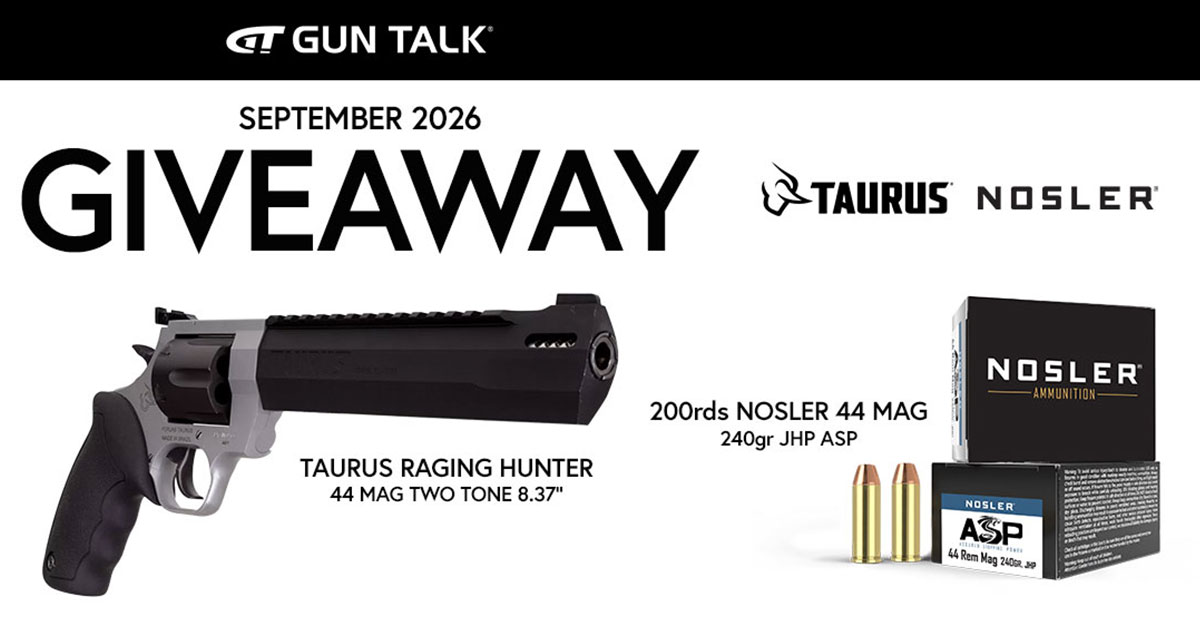
Gun Talk Giveaway
One lucky winner will bring home:
Open to U.S. residents 21+ only. Void where prohibited.