July 9, 2026
Gun Talk Staff
Let’s talk about something that every person who has ever bought a suppressor, an SBR, or any other NFA item knows intimately. The wait is one thing — we’ve all come to uneasy terms with the wait. But the paperwork ritual that kicks off the wait? That part has always felt like the federal government going out of its way to make a legal purchase feel like an interrogation.
Two fingerprint cards. A passport-style photo you had to get taken somewhere, because apparently a phone camera and a printer wasn’t good enough for the government. And if you were smart enough to use an NFA trust — which you should be, because trusts are excellent tools for NFA ownership — every single responsible person listed on that trust had to submit their own fingerprints and their own photo. Every. Single. Time. You add your spouse to the trust because you want them to be able to legally possess the items too. Great idea. Also, now your spouse has to schlep down for fingerprints and photos before you can even get in line for the six-to-twelve-month wait.
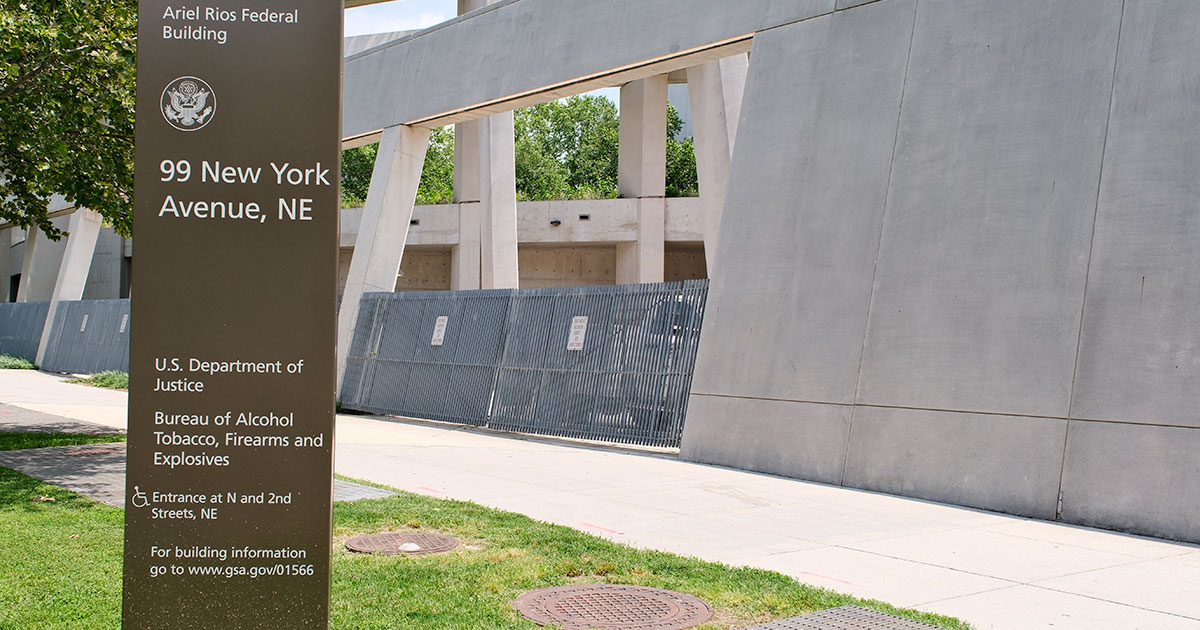
The ATF just proposed changing all of that. Published July 6, 2026, in the Federal Register — Docket No. ATF-2026-0397 for those keeping score at home — the proposed rule makes changes that are genuinely, practically meaningful for anyone navigating the NFA process. Not headline-grabbing deregulation. Not removing suppressors from the NFA entirely, which is what we’d all love to see. But real, tangible improvements that make a legal process less of a hassle for law-abiding people. And right now, we will take it.
Here’s the short version for people who don’t enjoy reading federal regulatory documents in their spare time. The ATF is proposing four specific changes to how NFA Form 4 and Form 1 applications work:
Right now, when you submit an NFA application as an individual, you’re required to send two fingerprint cards. Two. The proposed rule drops that to one. Now, if you’re already using eForms and submitting electronic fingerprints — and if you’re not, you should be, because it speeds things up considerably — this change won’t feel dramatic in practice. But it matters on paper, literally, for those still using physical cards. And it matters symbolically: the ATF is explicitly writing the fingerprint requirement as a reference to the statute, so that if Congress removes the fingerprint requirement from the law in the future, the regulations automatically align. They’re building in the infrastructure for future simplification. That’s not nothing.
This one’s personal for a lot of people. The current requirement that you submit a 2-by-2-inch passport-style photograph with your NFA application is, in 2026, about as logical as requiring you to send a telegram. Under the proposed rule, you can substitute a clear copy of a valid government-issued photo ID — your driver’s license, your passport, your state ID. Something you already have. Something you don’t need to go find a specific place to get taken.
This sounds like a minor quality-of-life improvement, and honestly it is. But it’s the kind of minor improvement that removes a real friction point for first-time NFA buyers, for people in rural areas where “go get a passport photo taken” is not a five-minute errand, and for anyone who has ever realized mid-application that they forgot this specific document and had to start the whole process over. Good change. Long overdue.
Here’s the big one, and if you own or are planning to set up an NFA trust, pay attention. Under current rules, every Responsible Person listed on an NFA trust has to submit fingerprints and photos with every Form 4 or Form 1 application. You add your wife to the trust so she can legally access the suppressor in a home defense scenario. Great. She also has to get fingerprinted. You add your adult son. He gets fingerprinted too. Every time you add a new item to the trust, everyone on the trust goes through it again.
The proposed rule eliminates the fingerprint requirement for trust Responsible Persons entirely — except in specific cases where the ATF or FBI actually needs them to resolve something in the background check. The ATF itself points out in the rule that the FBI only requests fingerprints in about 1% of NFA background checks. So 99% of the time, you were sending fingerprints that nobody was actually using. Now you don’t have to.
“The ATF admits it right there in the rule: the FBI only requests fingerprints in about 1% of background checks. That means 99% of the time, we were sending fingerprints that nobody looked at. Let that sink in for a second.”
Currently, the acceptance of digital EFT fingerprint files is an administrative practice — it’s allowed but not formally locked into the regulations. This proposed rule codifies it. Why does that matter? Because right now, a future ATF administration could theoretically reverse the acceptance of electronic fingerprints through administrative guidance without going through formal rulemaking. Codifying it in the regulations means any future attempt to eliminate electronic fingerprint submission would require a formal rulemaking process — public notice, comment period, the whole thing. It’s a subtle protection against backsliding. The current ATF is building a floor.
| Rule title | Fingerprint and Photograph Requirements for Firearms Applications |
|---|---|
| Docket number | ATF-2026-0397; ATF 2025R-14P |
| Published | July 6, 2026 │ Federal Register Vol. 91, No. 127 |
| Fingerprint change | Individuals: 2 cards reduced to 1 card. Trust RPs: fingerprints eliminated except when specifically required by ATF/FBI. |
| Photo change | 2"x2" passport photo replaced by copy of any valid government-issued photo ID (driver’s license, passport, state ID) |
| Electronic FPs | Acceptance of digital EFT fingerprint files formally codified in regulation — protected against administrative reversal |
| Applies to | NFA Form 4 (transfer), Form 1 (make), and related applications for suppressors, SBRs, SBSs, machine guns, and other NFA items |
| Comment deadline | October 5, 2026 — submit at regulations.gov, Docket No. ATF-2026-0397 |
| Effective date | After public comment period; final rule expected 2026-2027 |
Here’s what’s genuinely exciting about this moment beyond the specific rule we just walked through. The ATF’s “Reduce Burden” regulatory agenda page lists multiple additional proposed rules currently in the pipeline — and some of them are significant.
Right now, if a married couple wants to jointly possess an NFA firearm, they typically have to set up a trust to do it. A trust costs money and involves paperwork with an attorney. The ATF is proposing to allow married couples to file a joint application to make or transfer an NFA firearm without needing a trust at all. The transfer between spouses would not constitute a separate NFA transfer. If this passes, your spouse can legally possess the suppressor without either of you having to set up legal paperwork just to keep it in the same house. This is common sense. It took 92 years to get here, but still.
Currently, NFA applicants are required to send a copy of their Form 4 or Form 1 to the Chief Law Enforcement Officer — the sheriff or police chief — of their county. This was a legacy requirement from an era when CLEO sign-off was mandatory. The sign-off requirement was eliminated years ago, but the notification requirement survived. The proposed rule kills the notification entirely. There’s no operational reason for it. It was administrative theater. Good riddance.
Currently, if you want to transport your NFA firearm across state lines temporarily — say, to take your suppressed rifle to a match in another state — you have to submit ATF Form 20 and wait for approval before you leave. The proposed rule would allow short-term transport (365 days or fewer) without advance ATF approval. Just submit the form and go. For people who compete, who hunt in multiple states, or who simply live near a state line, this is a genuinely meaningful quality-of-life change.
Because this matters, and because we don’t believe in sugarcoating things here at Gun Talk Media: this proposed rule is not the win. The win would be suppressors, SBRs, and SBSs off the NFA entirely. The win would be these items treated like any other purchase — background check, walk out the door, done. No wait. No paperwork beyond what any firearm requires. That is the correct destination.
The NFA was enacted in 1934. It was a product of its political moment. The $200 tax stamp — now eliminated, thank you very much — was designed specifically to price most Americans out of the market for items the Roosevelt administration wanted restricted. The fingerprint-and-photo requirement was part of the same system. Dismantling the bureaucratic overhead while the underlying registration requirement remains is better than nothing. It is genuinely better. But it is not the final answer.
The ongoing litigation in the aftermath of the NFA tax repeal — cases arguing that without the taxing power, the federal government’s constitutional basis for NFA regulation of these items evaporates — is the longer-game play. These proposed ATF rule changes exist alongside that litigation, not instead of it. Both things can be true: these rule changes are a real improvement AND the underlying structure needs to go.
In the meantime, the comment deadline is October 5. Go comment. Support the changes. Then keep pushing for the rest.
Here’s the thing about public comment periods on federal rules: the agencies actually have to respond to substantive comments. They don’t have to agree with you. But they have to acknowledge you, and they have to address specific factual or legal arguments in their final rule. Your voice genuinely counts in this process in a way that it doesn’t in most of the places we try to make it count.
Anti-gun organizations know this. They are organized. They are already writing template letters. They will flood that comment portal with every argument they can find against these changes. The only counterweight to that is gun owners who care enough to spend five minutes.
You don’t need to be a lawyer. You don’t need to use legal language. You need to be a person with a real experience and a real opinion about a process that affects your rights. That is exactly what the comment process is designed to hear from.
The ATF’s proposed NFA fingerprint and photo rule changes are not the end of the story. They’re not even close to the end of the story. But they are real improvements to a process that has been needlessly burdensome for decades, proposed by an agency that appears — at least in this political moment — to be genuinely interested in being less adversarial to the law-abiding gun owner.
Take the win. Comment in support at regulations.gov. And then keep your eyes on the courts, on Congress, and on the next round of ATF rulemaking — because the agenda page has more proposals in the pipeline than just this one, and some of them are going to matter a great deal.
We’ll be watching. We’ll be covering it. And we’ll see you at the range, suppressed and properly papered, while the longer fight continues.
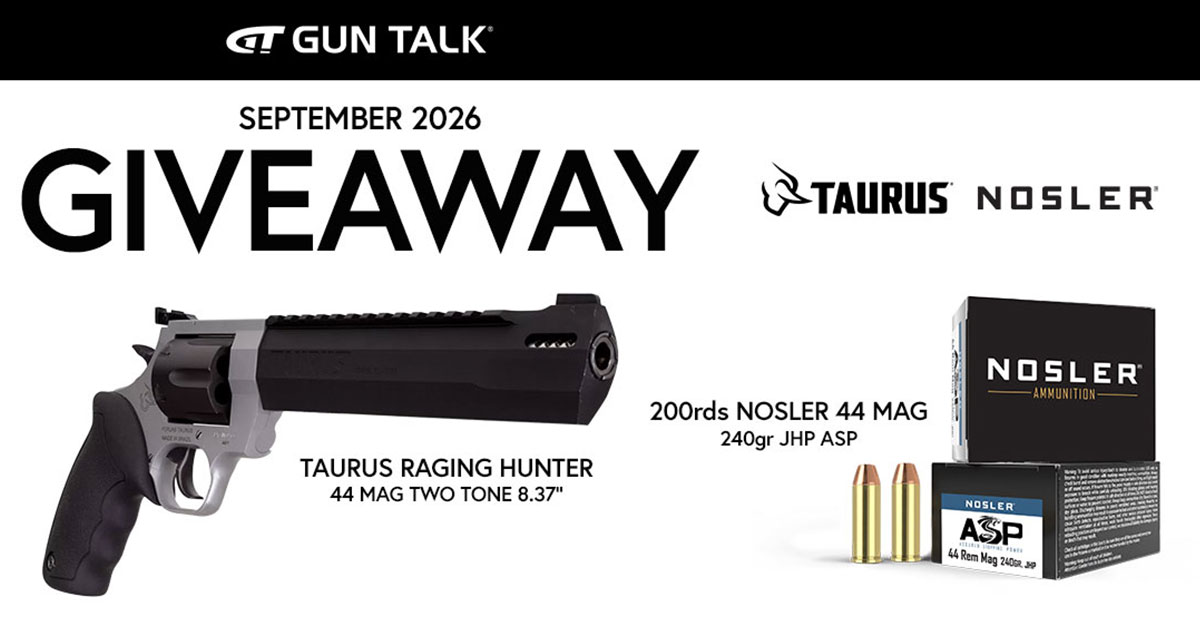
Gun Talk Giveaway
One lucky winner will bring home:
Open to U.S. residents 21+ only. Void where prohibited.