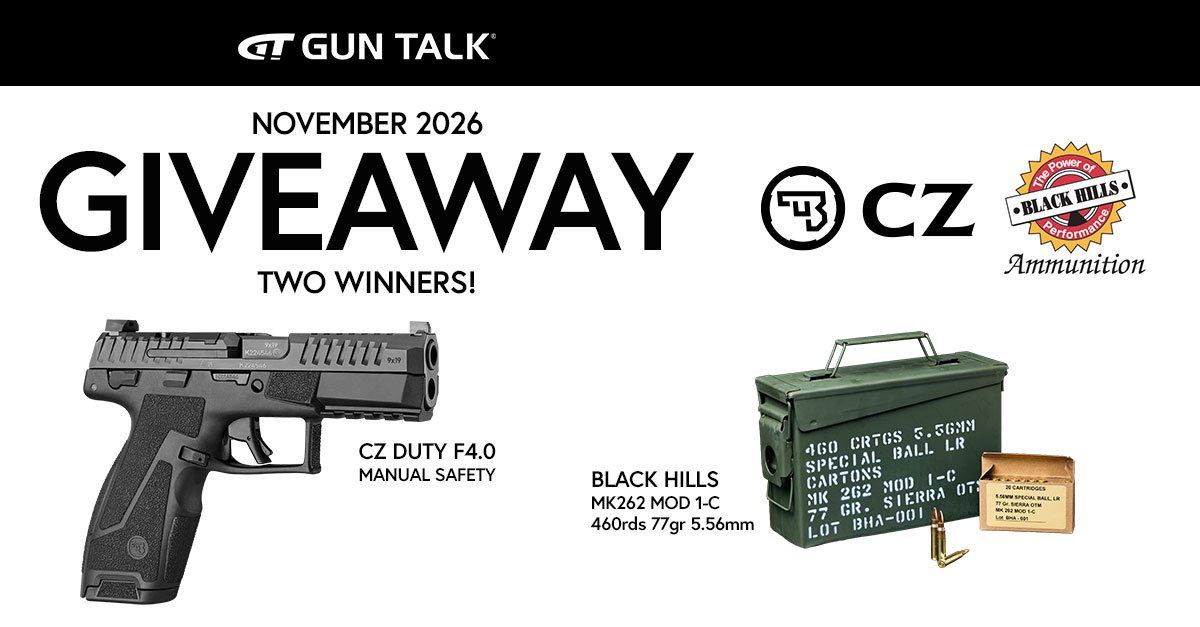
Gun Talk November Giveaway
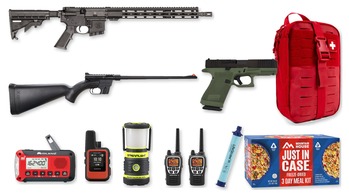
Two winners this month.
- CZ Duty F4.0Manual safety
- Black Hills MK262 MOD 1-C460 rounds, 77gr 5.56mm
Two winners. Must be 21+ to enter. Void where restricted.
Gun Talk November Giveaway
Two winners. Must be 21+ to enter. Void where restricted.
November 25, 2026
Gun Talk Staff
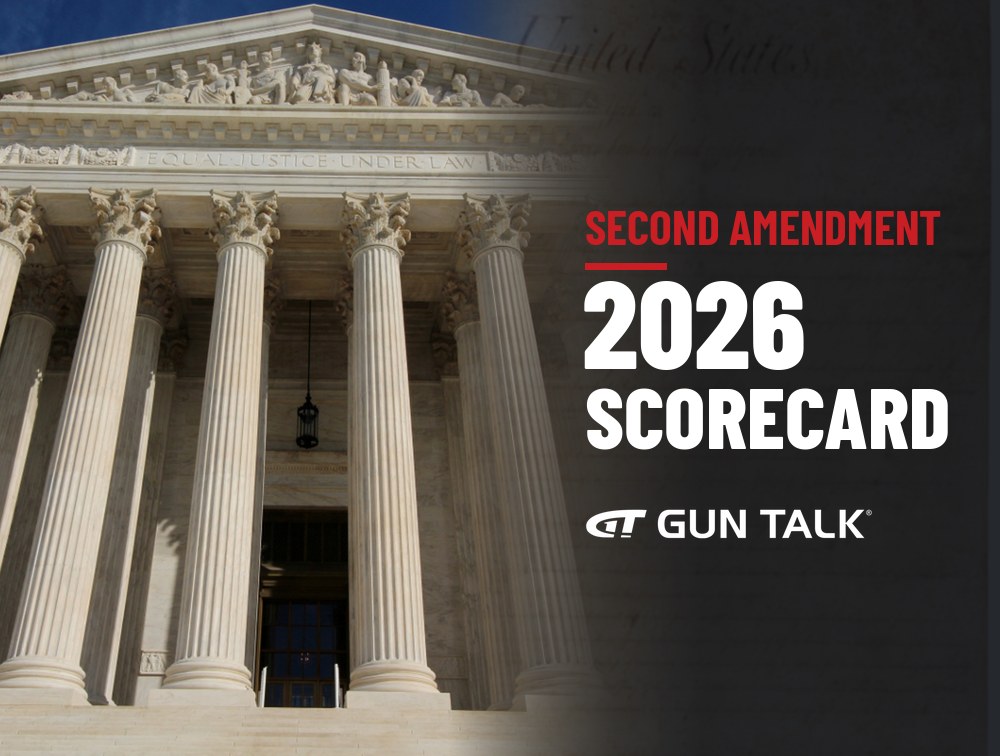
The legal and regulatory tide shifted dramatically in 2026. Federal courts struck down multiple Biden-era ATF rules, the $0 NFA tax Congress passed in 2025 took effect January 1, and a Texas federal judge used that change to knock out NFA registration and approval requirements for suppressors, SBRs, and SBSs. On December 2, the Supreme Court hears the most consequential gun rights argument in a generation. This is your scorecard.
In Silencer Shop Foundation v. ATF (consolidated with Jensen v. ATF), Judge James Wesley Hendrix of the U.S. District Court for the Northern District of Texas ruled on August 5, 2026 that the NFA’s registration and approval requirements for suppressors, short-barreled rifles, and short-barreled shotguns exceed Congress’s constitutional authority. The One Big Beautiful Bill Act cut the NFA making and transfer taxes on those items from $200 to $0, effective January 1, 2026. Because the NFA was enacted under Congress’s taxing power, those regulations existed to enforce the tax. No tax, no constitutional foundation.
The injunction itself covers the plaintiffs (including Silencer Shop Foundation, Gun Owners of America, the Texas State Rifle Association, FPC Action Foundation, CCRKBA, and 15 states) plus their members and customers. DOJ chose not to appeal, and on October 9 ATF announced it would stop requiring NFA approval and registration for suppressors, SBRs, SBSs, and AOWs for everyone, as a matter of enforcement discretion. Machine guns and destructive devices are unaffected, and ATF has said the policy could be rescinded.
ATF’s 2024 Final Rule that broadly redefined who counts as a firearms dealer was vacated in full by the Northern District of Texas on June 12, 2026. The rule said no minimum number of transactions was required, meaning a single sale, or even an offer to sell, could be cited as evidence of unlicensed dealing. The court found the rule unlawful and, on August 13, denied ATF’s request to keep parts of it alive.
DOJ filed an appeal to the Fifth Circuit on October 9, but the vacatur stays in effect unless that court steps in. ATF also has a proposed replacement rule pending, and the judge noted that the proposal “doubles down on the substance of the old Rule” in places.
On September 18, 2026, a divided Fifth Circuit panel ruled in Elite Precision Customs v. ATF that the federal laws barring direct interstate handgun sales violate the Second Amendment. Under those laws, you can’t buy a handgun directly from a dealer in another state. It has to be shipped to a dealer in your home state for the transfer, which usually adds a fee and a delay. Rifles and shotguns, by contrast, can already be bought in person from an out-of-state dealer when the sale is legal in both states.
The court found no historical tradition that supports the ban. The ruling splits with the Second Circuit, which upheld one of the same provisions in 2025. Who can rely on it beyond the plaintiffs, and possibly FPC members, is still being worked out, and ATF hasn’t issued new guidance.
In August 2026, a federal judge in the Northern District of Texas ruled ATF’s 2022 Frame-or-Receiver Rule unconstitutional on both Second Amendment and due process grounds in Defense Distributed v. Blanche (formerly VanDerStok). The rule expanded the definition of “firearm” to reach some unfinished frames, receivers, and parts kits, subjecting them to serial number, background check, and recordkeeping requirements.
The relief isn’t nationwide. It covers Second Amendment Foundation members and the specific Defense Distributed kits in the case. The Supreme Court’s 2025 decision in Bondi v. VanDerStok rejected only a facial statutory challenge to the rule, which left room for constitutional challenges like this one. The government has appealed to the Fifth Circuit.
On June 25, 2026, the Supreme Court ruled 6–3 that Hawaii’s law barring concealed carry permit holders from carrying on private property open to the public, like gas stations, restaurants, and stores, without the owner’s express permission violates the Second Amendment. The Ninth Circuit had upheld the law. “The Second Amendment has the same meaning in all parts of the United States,” Justice Alito wrote. “It cannot give way to ‘the spirit of Aloha’ in Hawaii.”
Wolford is part of a broader pattern. NRA-ILA puts gun control advocates at 1-and-6 at the Supreme Court since Heller, and lower courts applying Bruen’s text-and-history test have struck down a growing list of restrictions.
The year’s biggest moment: the Supreme Court hears arguments Wednesday, December 2.
“2026 isn’t just a good year for gun rights. It’s the year the machinery of gun control started breaking down at the federal level — in Congress, in the courts, and at the ATF. The Second Amendment community built this. Don’t stop now.”— Gun Talk Media
The cumulative effect of 2026’s legal wins is real, but the landscape is still settling. Here’s the honest take:
Courts don’t hand the Second Amendment down from on high. Litigants, organizations, and informed gun owners make it happen. 2026 is proof of what sustained engagement produces.

Gun Talk Giveaway
One lucky winner will bring home:
Open to U.S. residents 21+ only. Void where prohibited.