August 17, 2026
Gun Talk Staff
The Ruger AR-556 was introduced in 2014 and sold a lot of rifles. It was Ruger’s answer to the question everyone in the shooting sports industry was asking at the time: can you make a reliable, Ruger-quality AR-15 for under $600? The answer, it turned out, was yes, and the AR-556 became one of the best-selling entry-level ARs on the market for over a decade.
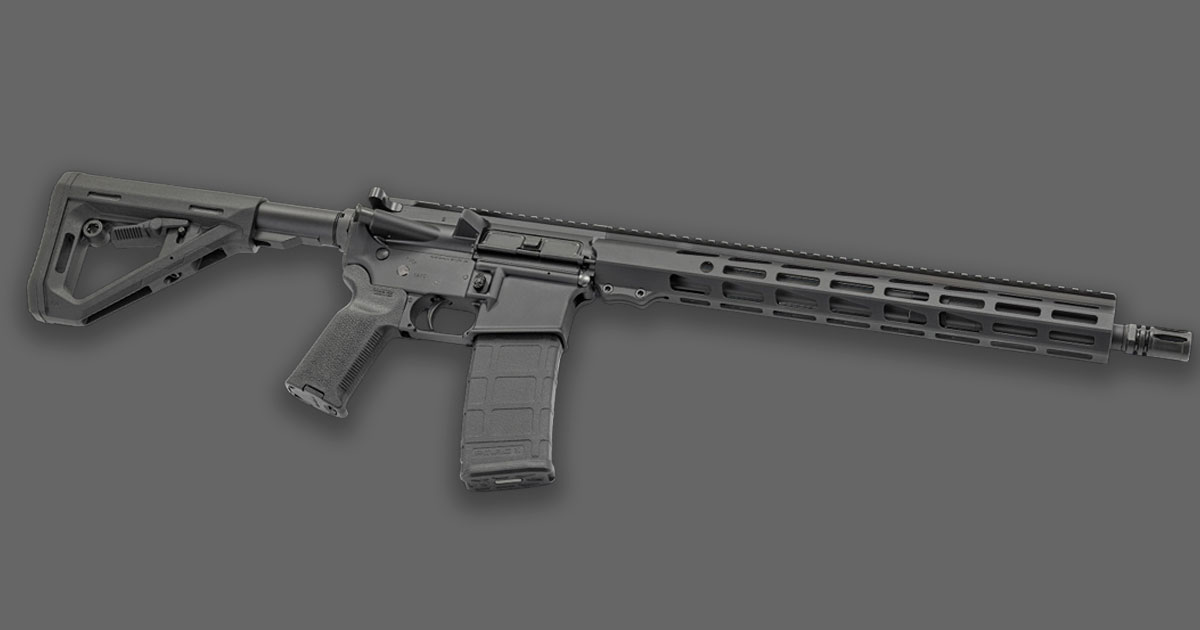
Then Ruger bought Anderson Manufacturing’s production facility in Hebron, Kentucky in late 2025, and the calculus changed. With additional manufacturing capacity and a modernized production setup, Ruger had room to do what it had clearly wanted to do with the AR-556 for years: scrap the compromises. The plastic drop-in handguard is gone. The pinned front sight base is gone. The budget furniture is gone on the upper model. The Harrier arrived at SHOT Show 2026 as a genuine ground-up redesign, not a renamed refresh, and it starts at $50 more than the AR-556 did with substantially more rifle for the money.
We got one in hand. Here’s the honest evaluation of what Ruger built.
“The Harrier is a definite improvement over its AR-556 predecessor and sports some features that other budget-friendly rifles do not have.” — AmmoLand, March 2026
To understand what the Harrier is, it helps to know exactly what it replaced and why those replacements matter. This isn’t a trim update. Ruger describes the Harrier as a ground-up redesign, and the spec sheet backs that up.
The AR-556’s drop-in plastic handguard was the most-criticized component of that rifle by everyone who reviewed it seriously. It worked fine, but it was noticeably budget-grade, it didn’t free-float the barrel, and it limited accessory mounting to whatever fit the old-style two-piece configuration. The Harrier replaces it with a slim free-float M-LOK handguard with attachment slots at 3, 6, and 9 o’clock positions and a full-length Picatinny top rail on the Model 28600.
Free-floating the barrel matters for accuracy. When a handguard makes contact with the barrel and transfers pressure from your support hand or from a bipod, it influences point of impact. A free-float handguard eliminates that contact. It’s a standard feature on rifles costing twice what the Harrier costs. Ruger put it in at $699.
The Harrier’s 16.1-inch barrel is nitride-treated rather than chrome-lined. Both processes improve corrosion resistance and lubricity, but nitride produces a harder surface finish and arguably better long-term wear characteristics. The bolt carrier group is also nitrided, which reduces the cleaning burden over long round counts and contributes to the rifle’s reputation for running reliably with less maintenance.
The barrel profile is government contour with a 1:8 twist rate, which is the correct call for a general-purpose 5.56 rifle in 2026. A 1:8 twist stabilizes everything from 55-grain plinking ammunition through 77-grain match loads, giving the Harrier genuine versatility as the shooter’s needs evolve over time.
Both the upper and lower receivers are forged from 7075-T6 aluminum with Type III hard-coat anodizing — the same material and process spec used by military contractors. The lower includes an integrated tension screw that lets the owner reduce upper-to-lower receiver play without installing a separate wedge or shim. That’s a detail that costs essentially nothing to include during manufacturing and meaningfully improves fit and feel.
The Model 28600 runs a mid-length gas system rather than the carbine-length system on the 28601. On a 16-inch barrel, mid-length gas is the better choice: the longer dwell time and lower port pressure produce softer bolt carrier velocity, which reduces felt recoil, extends component life, and makes the rifle more reliable with a wider range of ammunition. Most AR-15s in the $600–$800 range run carbine-length gas on a 16-inch barrel because it’s simpler to engineer. Ruger put the mid-length on the upper model and kept the carbine-length on the base.
The Harrier lineup is deliberately simple: two rifles, one decision. Here’s the full comparison.
| Specification | Model 28601 — Standard | Model 28600 — Upgraded |
|---|---|---|
| MSRP | $699 | $749 |
| Model number | 28601 | 28600 |
| Gas system | Carbine-length | Mid-length |
| Handguard | Partial Picatinny / M-LOK | Full-length Picatinny / M-LOK |
| Pistol grip | A2 standard | Magpul MOE-K2 |
| Stock | M4-style collapsible | Magpul DT Carbine adjustable |
| Barrel | 16.1" │ Nitrided │ Gov’t profile │ 1:8 twist (both models) | |
| Receivers | Forged 7075 │ Type III anodized │ Mil-spec (both models) | |
| BCG | Nitrided │ Mil-spec (both models) | |
| Trigger | Standard mil-spec │ ~6 lb pull (both models) | |
| Weight (unloaded) | 6.8 lbs (both models) | |
| Magazine | 30-round, where legal (both models) | |
| Muzzle | Threaded │ A2 flash hider (both models) | |
| Country of origin | USA (Hebron, KY) | |
The $50 difference buys you the mid-length gas system, the Magpul furniture, and the full-length top rail. For most buyers, the 28600 is the better value despite the higher price: the mid-length gas system alone is worth more than the $50 premium, and Magpul furniture costs $80–$120 to add separately if you buy the 28601 and then upgrade it. Buy the 28600 unless you specifically prefer A2 furniture or have a reason to prefer carbine-length gas.
Ruger’s acquisition of Anderson Manufacturing’s Hebron, Kentucky facility in late 2025 is the production story behind the Harrier. Anderson was one of the largest AR-15 component manufacturers in the United States — a company that supplied parts to dozens of other AR brands while also selling under its own label. The facility’s capacity, tooling, and workforce gave Ruger the ability to scale AR production in a way that the AR-556’s manufacturing footprint didn’t support at the same cost structure.
The practical result: Ruger can now produce a meaningfully more spec’d AR at the same price point it was previously selling a less-spec’d one. The Harrier isn’t an Anderson rifle with a Ruger logo. Ruger describes it as a ground-up redesign. But the expanded production infrastructure is why the free-float handguard, the nitrided barrel, and the updated furniture are possible at $699 rather than $849.
For the buyer, the Anderson connection matters in one other way: parts availability and mil-spec compatibility. The Harrier’s mil-spec dimensions mean the entire aftermarket ecosystem for AR-15s applies to it without modification. Grips, stocks, handguards, triggers, BCGs, charging handles — every standard AR part fits. Buying into the Harrier is buying into the largest firearms aftermarket in the world.
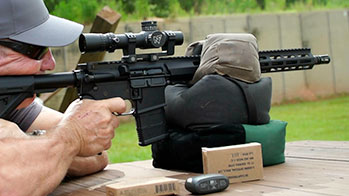
Hook & Barrel ran the most detailed published range evaluation of the Harrier, putting 200 rounds of 5.56 NATO and .223 Remington through the Model 28600 without a single failure to feed or eject. The reviewer noted that 200 rounds isn’t a torture test — that’s an honest acknowledgment — but 200 rounds of mixed ammunition through a new rifle without a malfunction is a solid baseline that the AR-556 routinely met over its eleven years of production.
Multiple reviewers across AmmoLand, TTAG, and Guns & Gadgets Daily noted the same things: the free-float handguard produces noticeably better mechanical accuracy than the old AR-556’s drop-in design, the mid-length gas system on the 28600 runs noticeably softer than a comparable carbine-length setup, and the Magpul furniture on the upper model transforms the handling feel of the rifle without requiring the buyer to source and install their own upgrades.
The trigger criticism is consistent across all reviews: functional, unremarkable, standard mil-spec. Nobody loves it. Nobody calls it a dealbreaker. For a $699–$749 rifle, a functional mil-spec trigger is the expectation, not the disappointment. The aftermarket addresses it easily.
| Announced | December 31, 2025 │ Debuted SHOT Show 2026 │ Manufactured Hebron, Kentucky |
|---|---|
| Action | Semi-automatic │ Direct impingement │ Rotating bolt |
| Chambering | 5.56x45mm NATO │ .223 Remington compatible |
| Barrel | 16.1" │ Government profile │ Nitrided │ 1:8 twist │ Threaded muzzle (1/2–28) |
| Muzzle device | A2 flash hider │ Threaded for suppressor or brake |
| Receivers | Forged 7075-T6 aluminum │ Type III hard-coat anodized │ Mil-spec dimensions │ Integrated tension screw (lower) |
| BCG | Nitrided │ Mil-spec │ M16-profile carrier |
| Handguard (28601) | Partial Picatinny / M-LOK │ Carbine-length gas system |
| Handguard (28600) | Free-float │ Full-length Picatinny / M-LOK │ Mid-length gas system |
| Furniture (28601) | A2 pistol grip │ M4-style collapsible stock |
| Furniture (28600) | Magpul MOE-K2 pistol grip │ Magpul DT Carbine adjustable stock |
| Trigger | Standard mil-spec │ ~6 lb pull │ Functional; aftermarket upgrade recommended for precision use |
| Weight | 6.8 lbs (unloaded) |
| Magazine | 30-round STANAG │ Ships with magazine where lawful |
| MSRP | $699 (Model 28601) │ $749 (Model 28600) |
| Warranty | Ruger Limited Lifetime Warranty │ ruger.com/service |
| Find it at | ruger.com │ Cabela’s │ Bass Pro Shops │ Brownells │ Palmetto State Armory │ GunBroker │ Academy Sports |
The AR-556 was a good rifle for its era. It answered the question “can Ruger make a reliable entry-level AR” with an unambiguous yes and sold a lot of guns doing it. The Harrier answers a different question: can Ruger make a genuinely well-specified AR at the same price point, built in an expanded domestic facility, with the hardware that buyers actually want rather than the compromises that entry-level production used to require?
The answer is also yes. The free-float handguard, the nitrided barrel and BCG, the forged 7075 mil-spec receivers, and the mid-length gas system on the 28600 represent a meaningful upgrade over anything Ruger has offered in the AR category before — at a price that’s within $50 of what the AR-556 closed out at. The trigger is the honest caveat and it’s an honest caveat that applies to every factory mil-spec trigger at this price.
If you’ve been looking at the AR-15 market and trying to decide where to start, or if you want to add a second reliable rifle to the safe without spending full-custom money, the Harrier 28600 at $749 is one of the strongest specific recommendations we can make in the current market. Visit ruger.com or your local dealer.

Gun Talk Giveaway
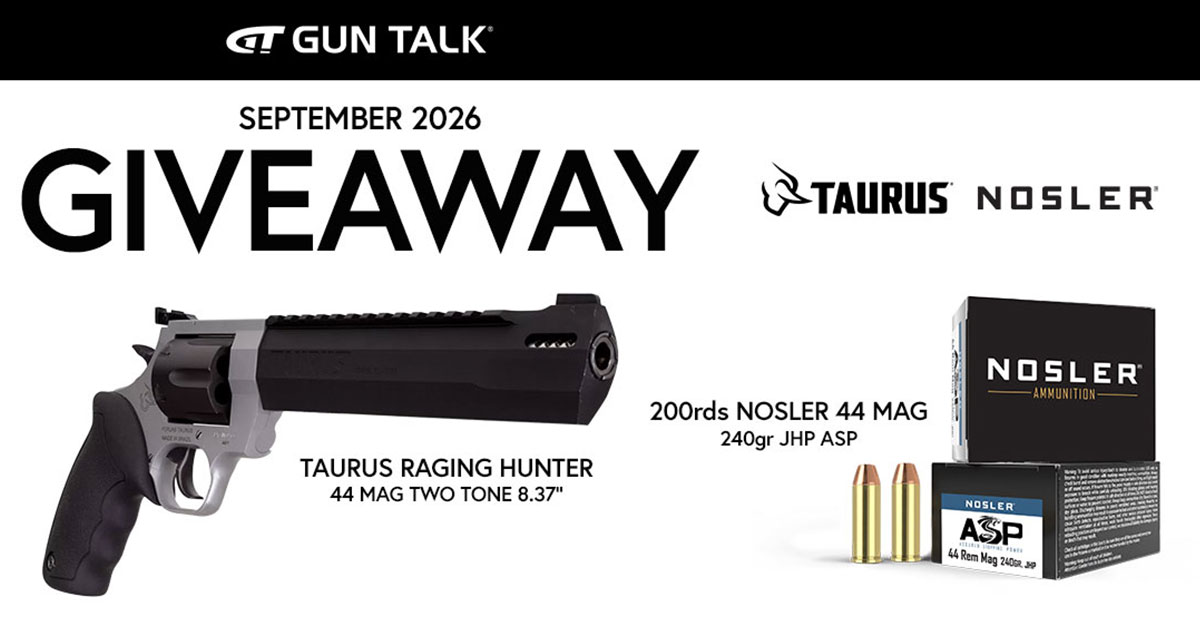
One lucky winner will bring home:
Open to U.S. residents 21+ only. Void where prohibited.