September 10, 2026
Gun Talk Staff
Dead Air Silencers was founded in 2014 by Mike Pappas and Todd Magee with a stated philosophy of “no quarter” design — no compromises on materials, no shortcuts on durability, and no apologies for pricing suppressors at what quality actually costs. Twelve years later, that philosophy has produced one of the most respected suppressor lineups in the American market. The Sandman series is a benchmark in the hard-use tactical suppressor category. The Nomad series has earned a reputation as one of the best lightweight precision rifle options available. The Sierra 5 is what happens when a company that knows how to build a .30-caliber suppressor applies that knowledge specifically to 5.56.
The 2026 legal and market context makes this guide more timely than any we could have published in prior years. The NFA tax on suppressors was eliminated on January 1, 2026. The Silencer Shop Foundation v. ATF ruling has enjoined Form 4 registration requirements for covered parties. NFA checks are up 177% year-over-year. The suppressor market is the fastest-growing segment of the firearms industry. And Dead Air has released several new models in 2026 that change the calculus for specific use cases.
This guide is organized by use case. Find the category that matches your rifle and how you shoot it, then read the specific models that belong in that conversation.
Before getting into individual suppressors, understanding Dead Air's two quick-detach mounting systems is essential because most models are available in one or both, and the mount choice affects compatibility across your whole suppressor ecosystem.
KeyMo is Dead Air's original proprietary quick-detach system, built around a taper-lock interface that allows one-handed installation and removal in seconds. The KeyMo system is widely praised for its secure lockup — it doesn't wobble, doesn't carbon-lock, and maintains point-of-impact consistency shot to shot. It's compatible across the entire Sandman and Sierra 5 lineup and is also cross-compatible with SilencerCo's ASR system, giving you access to the largest ecosystem of QD muzzle devices on the market.
KeyMo mounts thread onto a KeyMo-compatible muzzle device (flash hider or brake) that is installed on your barrel. The suppressor locks onto the muzzle device with a quarter-turn. Because Dead Air and SilencerCo both use the ASR-compatible interface, you can run a KeyMo suppressor on any host rifle equipped with an ASR-compatible muzzle device from either brand.
The Xeno system is Dead Air's newer lightweight QD architecture, designed with reduced weight compared to KeyMo while maintaining the same secure lockup principle. Xeno uses the industry-standard HUB thread pattern (1.375×24) at the rear, giving it broader third-party compatibility than KeyMo alone. For PRS competitors and precision rifle hunters who are weighing every ounce, the Xeno adapter's lighter profile is worth considering. Several newer Dead Air models are available exclusively in Xeno (the Nomad Ti OTB, for example), while others offer both.
Many Dead Air suppressors use the HUB (1.375×24) rear thread pattern, which is an industry standard that makes the suppressor compatible with KeyMo, Xeno, SilencerCo ASR, Q Plan B, and virtually any other HUB-compatible mounting system. If a suppressor ships with HUB threading, you have the broadest possible mounting flexibility. Check each model's spec sheet — some are KeyMo or Xeno specific, while others are HUB universal.
If your primary host is an AR-15 in 5.56 NATO or .223 Remington, a dedicated 5.56 suppressor is worth considering over a larger-bore .30-caliber can. A 5.56-optimized suppressor has baffles and bore geometry tuned specifically for the smaller, higher-velocity 5.56 projectile. The result is typically better sound reduction in a shorter, lighter package than you get running 5.56 through a .30-caliber can.
The Sierra 5 is Dead Air's purpose-built 5.56 suppressor and the clear choice for shooters who run 5.56 exclusively and want optimized performance for that specific caliber. The Stellite baffle stack — a cobalt-chromium alloy that handles heat significantly better than stainless steel — makes it full-auto rated and capable of sustained fire on an AR-15 without the heat-related degradation concerns you get with lesser baffle materials. No minimum barrel length restrictions means it works on PDW builds, SBRs, and pistol-length hosts without caveat. TTAG called it “everything you want in a hard-use, minimalistic AR-15 silencer and nothing you don't.” Impact shift at 100 yards is under half an inch. KeyMo mount is the right choice for shooters with existing KeyMo muzzle devices; Xeno for those building a lighter setup. R-series front caps are interchangeable with Sandman, giving you accessory flexibility across the Dead Air ecosystem.
The Sandman series is Dead Air's flagship hard-use rifle suppressor family, built for the AR-15 shooter who runs 5.56 and .300 BLK as well as the AR-10 shooter in .308/7.62 NATO who needs something that can handle sustained fire. The Sandman runs Cobalt 6 (Stellite) baffles welded into a solid core — the most durable construction approach in production rifle suppressors. This is the suppressor family trusted by military and law enforcement worldwide, and it comes in four configurations for different length and weight priorities.
The Sandman-K adds only 2.9 inches to the overall length of the host rifle and weighs 12.8 oz. On a 10.3-inch SBR or a PDW-length AR build, the K makes suppressed shooting viable without turning a short rifle into an unwieldy long rifle. No minimum barrel length restriction. The Stellite core handles the brutal gas volumes and heat that short-barreled hosts generate better than aluminum or standard stainless baffles. Not the quietest Sandman — the shorter baffle stack means less sound reduction than the S or L, and hearing protection is recommended for sustained range sessions. But the Sandman-K does something other suppressors can't: it puts a full-auto-rated, Stellite-core suppressor on a host that's already 10 inches and keeps the whole package manageable. For the SBR/PDW user, there is no better option in the Sandman line.
The Sandman-S is the most popular suppressor Dead Air makes, and for most AR-15 and AR-10 shooters it's the right answer. Six Cobalt 6 baffles welded into a solid stainless core, KeyMo QD, full-auto rated, no barrel length restrictions, ~30 dB sound reduction on 7.62, rated to .300 RUM. It's 6.8 inches and 17.7 ounces — not light, but not unwieldy on a full-size AR platform. The detachable R-Series front cap is user-replaceable if it gets abused in the field. If you own one suppressor for hard AR use, this is it. The S sits between the K's compactness and the L's maximum sound reduction, hitting the sweet spot for both. For the AR shooter who uses their rifle for defensive/duty work, range sessions, and occasional hunts, the Sandman-S is the suppressor that does it all without significant compromise in any direction.
The Sandman-L is 8.9 inches and 21.8 ounces — the biggest, heaviest, quietest Sandman. It delivers approximately 31 dB of sound reduction on 7.62 NATO, which is one of the best suppression figures available from a .30-caliber production suppressor of any design. The additional baffle length is what produces that number. Same Stellite core construction as the S. Full-auto rated, no barrel restrictions, rated to .300 RUM. For the heavy-use tactical bolt rifle or a .308/.30-06 AR-10, there's not a better suppressor. The weight and length tradeoff is real — nearly a pound and a half on the muzzle is noticeable in balance — but the suppression return is equally real. PRS and tactical precision shooters who want maximum quiet on their .308 host should compare the Sandman-L against the Nomad-L and decide based on whether they prioritize Stellite durability (Sandman) or lighter weight (Nomad).
The Sandman-X is Dead Air's 10-year anniversary model, built from Haynes 282 using additive manufacturing — 3D printing in a nickel-based superalloy that handles extreme heat while allowing baffle geometries impossible with traditional machining. The wider 1.65-inch bore (vs. 1.5 inches on the S and L) is the key feature: more bore volume means less gas trapped in the suppressor, which reduces blowback into the shooter's face on AR platforms. For high-volume 5.56 sessions where blowback is a nuisance, the X is meaningfully more comfortable than the S. The HUB threading opens the X to the full ecosystem of QD systems beyond KeyMo. The modular configuration (6.4 or 6.9 inches depending on configuration) adds flexibility. Shoot-On's first test concluded that Dead Air has added another sturdy hero to the Sandman lineup. If you're deciding between the Sandman-S and the X: the S is proven over more rounds across more users; the X is the evolution with better blowback management and newer materials at a higher price.
New for 2026, the CT5P is Dead Air's first suppressor purpose-built for patrol rifle applications — law enforcement carbines, duty AR-15s, and shooters who need to run a compact, gas-regulated can on a 10.5-to-16-inch AR in full-auto.
The CT5P is specifically engineered to minimize hearing-loss risk and reduce muzzle concussion in confined spaces — the two requirements that drive law enforcement suppressor selection. The gas-regulated design manages the blowback that causes discomfort and training interference on indoor ranges and in vehicles. The Triskelion baffle design is specific to the CT5P and represents new engineering rather than a variant of existing Sandman or Sierra architecture. For civilian AR-15 shooters, the CT5P addresses the same problems: blowback management, compact footprint, suitability for 10.5-inch and longer hosts. At 5.5 inches and 14.9 oz it's shorter and lighter than the Sandman-S while rated to 6mm ARC — good news for AR-15 owners who run precision AR builds in 6mm ARC or 5.56. This is Dead Air's most specialized AR suppressor and the most directly relevant to the home defense and duty use case.
PRS competition and long-range hunting impose a different set of suppressor requirements than the AR hard-use or duty category. Weight matters — every ounce forward of the action affects balance and swing. Point-of-impact shift on mount/dismount must be minimal. Sustained fire through a day of competition requires a suppressor that handles heat without degrading. And in PRS specifically, the rules may restrict overall rifle weight, making suppressor weight a direct competitive variable.
The Nomad series is Dead Air's answer to all of these requirements, and it is now five models — the standard Nomad-30, the Nomad-L, the Nomad Ti XC, the Nomad Ti OTB, and a dedicated direct-thread variant — covering the full range from lightweight titanium PRS builds to maximum-suppression magnum rifle applications.
The Nomad-30 is Dead Air's gap-filler between the Sandman series' maximum durability and the Nomad-L's maximum suppression. At 14.5 oz it's lighter than the Sandman-S (17.7 oz) while delivering nearly equal sound reduction. The tubeless design maximizes internal volume without adding weight. Ships with a 5/8×24 direct thread mount and accepts HUB-compatible QD systems, giving it the broadest mounting flexibility in the Nomad line. The Nomad-30 is particularly well-positioned for hunters who want one suppressor across multiple rifles — it goes from a bolt-action .30-06 hunting rifle to a semi-auto AR-10 in .308 to an AR-15 in 5.56 without a mount change if all three share HUB-compatible muzzle devices. For PRS shooters: the Nomad-30 is a solid entry point but the Nomad Ti XC delivers significantly better weight savings for serious competition use.
The Nomad-L is the quietest suppressor in the Nomad lineup and one of the quietest welded stainless suppressors in production. Its 8.4-inch baffle stack provides the internal volume for maximum sound reduction on high-pressure cartridges like 6.5 Creedmoor, .300 Win Mag, and .300 Norma Mag that stress shorter suppressors. At 18.3 oz it weighs virtually the same as the Sandman-S (17.7 oz) but is two inches longer and significantly quieter. For PRS shooters focused on maximum suppression over minimum weight, the Nomad-L is the stainless option to evaluate. Compare it directly against the Sandman-L: both are in the 18–22 oz range, both deliver approximately 30–31 dB. The Sandman-L wins on raw durability (Stellite core vs. stainless) for hard-use applications; the Nomad-L wins on price ($999 vs. $1,099) and HUB flexibility. For precision hunting and PRS where you're not doing mag dumps, the Nomad-L's stainless core is entirely adequate.
The Nomad Ti XC is Dead Air's lightest .30 caliber suppressor at 7.4 oz for the body — a titanium 3D-printed design using a two-stage coaxial baffle system that handles both high-pressure and low-pressure cartridges. For PRS competitors counting grams, a 9.7 oz total assembly (with Xeno adapter) vs. 17–21 oz for stainless alternatives is a meaningful competitive variable. Available in raw titanium satin finish or Cerakote options. The Nomad Ti XC is not full-auto rated and has minimum barrel length requirements (12.5" for supersonic 5.56, 6" for .300 BLK subsonic). For dedicated precision bolt-gun use those restrictions rarely matter. If you're building a PRS rifle for 6.5 Creedmoor, .308, or a magnum class cartridge and weight matters to you competitively, the Nomad Ti XC is the suppressor to put on your shortlist. It competes directly with the Thunder Beast ULTRA 9 and Surefire SOCOM at this use case and price point.
The Nomad Ti OTB (Over-The-Barrel) is Dead Air's 2026 answer to the balance problem that plagues conventional muzzle-end suppressors: a 7–8-inch suppressor hanging off the front of a rifle shifts the balance point forward noticeably. The OTB design extends the blast chamber rearward over the barrel, so only 4.6 inches protrudes past the muzzle. At 10.5 oz for the full assembly, it's both light and balanced. The over-the-barrel configuration means the rear portion of the suppressor surrounds the barrel rather than extending forward, keeping your rifle's balance closer to its unsuppressed feel. For hunters carrying a rifle all day in the backcountry, and for PRS competitors who want to minimize front-end weight while maintaining suppression, the OTB design is worth serious evaluation. It's the most distinctive addition to the Dead Air lineup in 2026.
| AR-15 5.56 dedicated use | Sierra 5 │ $849–$899 │ Optimized specifically for 5.56. Stellite baffles. Shorter and lighter than .30 cal cans. Full-auto rated. No barrel restrictions. Best pure 5.56 performance. |
|---|---|
| AR-15 SBR / PDW (sub-10.5" barrel) | Sandman-K │ $999 │ Shortest Sandman. No barrel restrictions. Handles brutal gas volumes of short hosts. Stellite core survives the heat and pressure. |
| AR-15 / AR-10 hard use, all-around | Sandman-S │ $1,199 │ The proven standard. Full-auto rated. Cobalt 6 core. Works across 5.56, .300 BLK, and .308. Military and LE trusted. |
| AR-10 / .308 maximum suppression | Sandman-L │ $1,099 │ 31 dB on 7.62. Maximum quiet for hard-use applications. Longer and heavier than the S, significantly quieter. |
| AR-15 duty / patrol rifle with blowback concerns | CT5P │ $899–$1,099 │ Gas-regulated. Minimizes blowback and concussion. 10.5" minimum barrel. Built for LE duty applications. |
| AR-15 / AR-10 next-gen with reduced blowback | Sandman-X │ $1,299–$1,499 │ Haynes 282 3D-printed. Wider bore = less blowback on DI ARs. HUB threading for broadest compatibility. |
| Versatile do-it-all for multiple rifles | Nomad-30 │ $999 │ HUB compatible. 5.56 through .300 Win Mag. 14.5 oz. Lighter than Sandman-S, nearly as quiet. Best multi-rifle choice. |
| PRS competition — weight is a priority | Nomad Ti XC │ $1,099 │ 9.7 oz total. Titanium. 3D-printed. Lightest .30 cal Dead Air makes. Not full-auto rated but PRS doesn't need it. |
| Precision hunting / long-range bolt gun (max quiet) | Nomad-L │ $999 │ 18.3 oz. Quietest stainless Nomad. Works through .300 Norma Mag. Hunting and precision shooting workhorse. |
| Backcountry hunting / balance-critical builds | Nomad Ti OTB │ $1,199 │ Over-the-barrel design. 4.6" added length only. 10.5 oz. Keeps rifle balance closest to unsuppressed feel. |
All Dead Air suppressors are NFA items. Your acquisition process depends on covered-party status. Verify your status before purchasing.
Photo(s) courtesy of Dead Air Silencers.

Gun Talk Giveaway
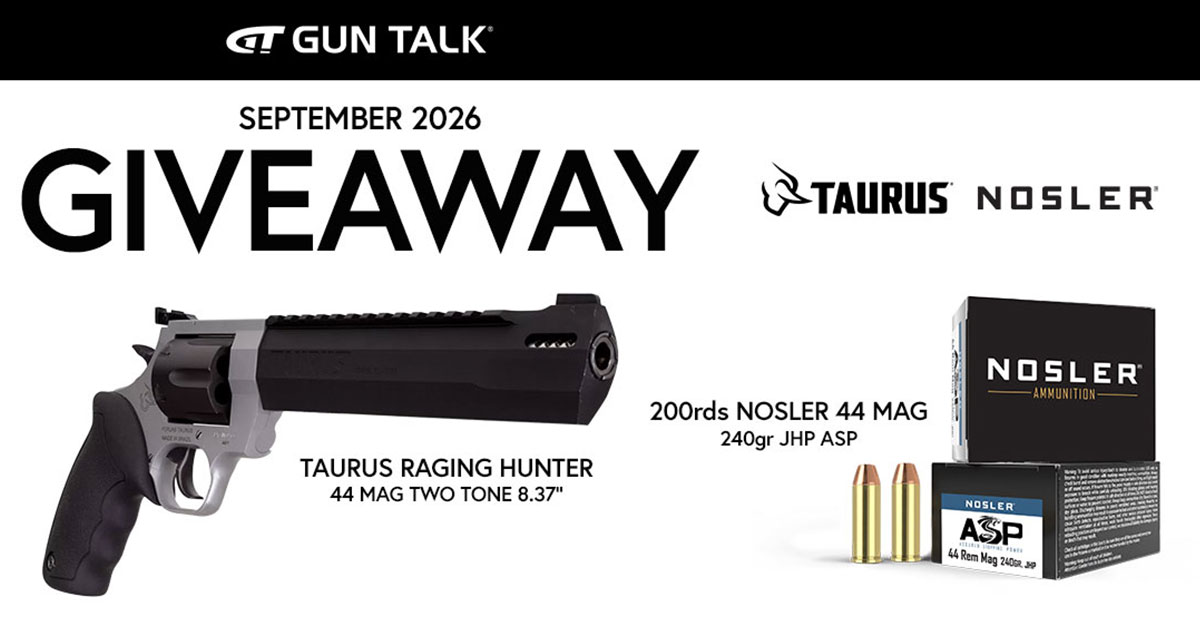
One lucky winner will bring home:
Open to U.S. residents 21+ only. Void where prohibited.