August 4, 2026
Gun Talk Staff
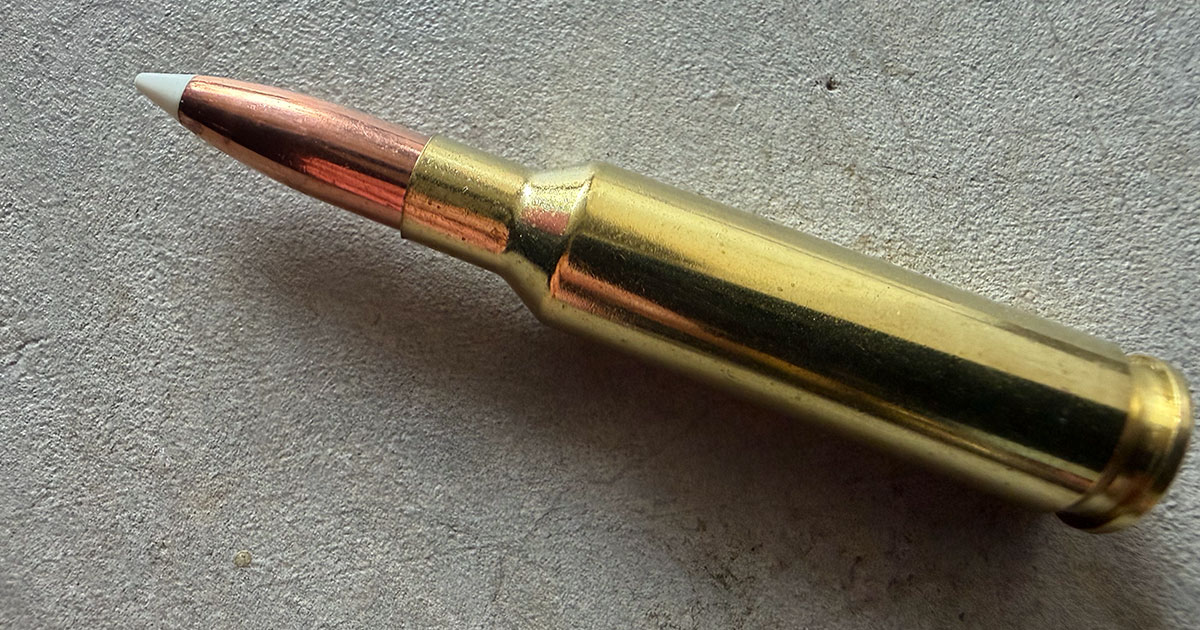
The cartridge debate that refuses to die has a new wrinkle in 2026. The 6.5 Creedmoor has been the most popular centerfire rifle cartridge in America for several years running, has Federal’s new +Peak technology making it faster than ever, and remains the dominant chambering in NRL Hunter and precision rifle competition. The 6mm ARC — Advanced Rifle Cartridge — launched in 2020, was designed for military applications, and has been quietly building a passionate following among AR-15 precision shooters, hunters who want to shoot suppressed short-barrel setups, and anyone who looked at the 6.5 Creedmoor’s bolt-gun-centric universe and thought: there has to be a better way to do this from an AR-15.
The comparison between these two cartridges is not apples-to-apples, and that is exactly why it generates so much discussion. The 6.5 Creedmoor and 6mm ARC share a designer — Hornady — and share a fundamental philosophy of maximizing long-range performance through efficient case design and high-BC bullets. But they serve different primary use cases, live on different platforms, and make different trade-offs. Understanding those differences is the only way to make the right choice for your specific situation.
This guide covers both cartridges honestly, across every relevant dimension: ballistics, platform compatibility, hunting application, competition use, ammunition availability, and the specific scenarios where each one is the correct answer.
The 6.5 Creedmoor was introduced by Hornady in 2007, developed in collaboration with competitive shooter Dennis DeMille specifically for NRA high-power competition. The design brief was clear: produce a cartridge that fit in a standard short action, ran high-BC bullets at competitive velocities, produced low recoil, and maintained exceptional accuracy at distance. It achieved all of that. And then it did something its designers probably didn’t fully anticipate: it became the most commercially successful new rifle cartridge of the 21st century, spreading from the competition line into hunting, military evaluation, and eventually the dominant NRL Hunter chambering.
Nineteen years after its introduction, the 6.5 Creedmoor is the most widely available, most widely used, and most thoroughly data-supported centerfire rifle cartridge in the American market outside of legacy calibers like the .308 Winchester and .30-06 Springfield. The ammunition ecosystem is massive. The rifle options span every price point from the Ruger American to custom Defiance actions. The handloading data is exhaustive. And with Federal’s 2026 +Peak technology delivering 250-300 fps more velocity from the same case, the performance ceiling just got dramatically higher.
The 6mm ARC launched in 2020 with a more focused and less conventional design brief. Hornady developed it with specific input from the U.S. Department of Defense to address a genuine operational gap: a cartridge that could run in the AR-15 platform — specifically the AR-15, not the larger AR-10 — while delivering ballistic performance comparable to larger cartridges at extended ranges.
The engineering solution was elegant. Hornady took the 6.5 Grendel case — already optimized for the AR-15’s magazine and bolt face constraints — and necked it down to accept 6mm bullets. This produced a cartridge that runs on the 6.5 Grendel bolt face and magazines, fits in a standard AR-15 lower receiver, and drives high-BC 6mm projectiles (typically 103-110 grains) at velocities between 2,600 and 2,800 fps from an 18-inch barrel.
The DoD tested 6mm ARC-chambered rifles from Barrett. The cartridge delivered. And the civilian market followed, particularly among AR-15 precision shooters and hunters who wanted the AR platform’s ergonomics, magazine capacity, and suppressor compatibility without the ballistic compromises of 5.56 NATO at distance.
“The 6.5 Creedmoor was built for competition. The 6mm ARC was built for the battlefield. Both ended up hunting the same deer at 400 yards. The debate about which one to choose matters more than the internet makes it seem — and less than it seems.”
| Category | 6mm ARC | 6.5 Creedmoor |
|---|---|---|
| Introduced | 2020 (Hornady / DoD) | 2007 (Hornady / Dennis DeMille) |
| Bullet diameter | .243 in. (6mm) | .264 in. (6.5mm) |
| Common bullet weights | 103-110 gr match; 90-103 gr hunting | 120-147 gr match; 120-143 gr hunting |
| Typical MV (18" barrel) | 2,600-2,800 fps (108 gr) | 2,620-2,700 fps (140 gr) — standard brass |
| MV w/ +Peak (2026) | Not yet available in +Peak | 3,050-3,100 fps (130 gr) — game-changing |
| Ballistic coefficient | 0.536 G1 (108 gr ELDM) — excellent for AR-15 | 0.697 G1 (147 gr ELDX) — among highest available |
| Recoil (18" AR-15) | Very mild — AR-15 weight absorbs well | Bolt gun: moderate. AR-10: heavier impulse |
| Energy at muzzle | ~1,813 ft-lbs (108 gr @ 2,750 fps) | ~2,370 ft-lbs (140 gr @ 2,750 fps) |
| Energy at 500 yards | ~931 ft-lbs — adequate for deer | ~1,428 ft-lbs — more margin for larger game |
| Drop at 500 yards | -54.1 in. (108 gr Hornady Match) | -43.2 in. (147 gr Hornady Match) |
| Primary platform | AR-15 (native) │ Bolt gun (limited options) | Bolt gun (native) │ AR-10 (heavier, larger) |
| Magazine system | 6.5 Grendel magazines (MDT, Duramag, Geissele) | Standard .308 / AICS pattern (universal) |
| Bolt face | Grendel / PPC — not standard short-action | Standard .308 bolt face — universal |
| Suppressor friendly | Outstanding — low pressure, AR-15 DI runs well suppressed | Good — especially in short-barrel bolt guns with +Peak |
| Ammo availability | Growing — Federal, Hornady, Barnes, Black Hills | Excellent — widest selection of any modern cartridge |
| Ammo price (match) | ~$1.50-2.00/round (growing selection) | ~$1.20-1.80/round (broad competition at all price points) |
| Handloading data | Good — 6 years of established data | Extensive — 19 years, industry benchmark |
| Factory rifle options | Limited bolt guns (Howa Mini); broad AR-15 uppers | Widest selection of any modern cartridge across all price points |
| Best for | AR-15 precision, suppressed hunting, military-style builds | NRL Hunter, bolt-gun hunting, long-range competition, versatility |
Most 6mm ARC vs. 6.5 Creedmoor debates focus on ballistics. The honest answer is that ballistics are not the primary decision variable. The platform is.
The 6mm ARC was designed for the AR-15. It runs on the AR-15’s lower receiver, its standard buffer and carrier, and the Grendel bolt face. Building a 6mm ARC AR-15 is as simple as swapping an upper receiver onto a standard lower. The cartridge is optimized for the AR-15’s weight, gas system, and ergonomic characteristics. It is at its absolute best in the AR-15 platform.
The 6.5 Creedmoor was designed for bolt guns. It runs on the standard .308 bolt face and fits any standard short-action. The ecosystem of bolt-gun rifles, barrels, stocks, and accessories built around the .308 family accommodates the 6.5 Creedmoor completely. You can run a 6.5 Creedmoor in an AR-10, but the AR-10 is a significantly heavier, larger, and more expensive platform that partly defeats the purpose of the 6.5 Creedmoor’s light-recoil, compact design advantages.
“If you want a bolt gun, the 6.5 Creedmoor is the correct answer in almost every scenario. If you want an AR-15 precision build, the 6mm ARC is the correct answer in almost every scenario. The debate is usually really a platform debate in disguise.”
The 6.5 Creedmoor is the dominant chambering in NRL Hunter for reasons that go beyond performance: the ammunition availability, the depth of public DOPE data, the breadth of rifle options at every price point, and the factory load selection that includes match-grade ammunition from Federal, Hornady, Berger, and others all reinforce each other. When Federal’s Gold Medal Sierra Tipped MatchKing load in the +Peak configuration ships later this year, the 6.5 Creedmoor’s competition case gets even stronger.
The 6mm ARC is a viable competition chambering in divisions that allow it, and its AR-15 platform compatibility creates a weight and handling advantage in field-style precision competitions where carrying the rifle matters. But for NRL Hunter specifically — where bolt guns are the dominant tool and public DOPE libraries are essential for time-efficient stage prep — the 6.5 Creedmoor’s ecosystem advantage is substantial.
This is where the 6mm ARC conversation ends before it really begins. No other cartridge delivers the 6mm ARC’s combination of effective range, terminal performance, and AR-15 platform compatibility. The 5.56 NATO tops out around 600 yards for practical precision use. The 6.5 Grendel is ballistically similar but gives up some performance. The 6mm ARC hits harder at distance than either, runs high-BC bullets that buck wind better, and does it all from the same AR-15 lower your existing magazines, trigger, and furniture already fit.
The AR-15 precision community — particularly the portion interested in PRS carbine divisions, field shooting, and suppressed precision builds — has adopted the 6mm ARC enthusiastically and for good reason. It genuinely is the best cartridge the AR-15 platform can run at extended range. It’s worth noting that when we reviewed the Henry SPD PREDATOR — a lever-action chambered in .223 Remington — our field reviewer specifically floated the 6mm ARC as the chambering he’d most want to see on that platform next, for exactly the wind-sensitivity reasons discussed here.
Inside 400 yards on deer-sized game, both cartridges are adequate. The 6.5 Creedmoor carries more energy at impact, produces more reliable expansion across a wider range of hunting bullets, and has a deeper bench of factory hunting ammunition to choose from. The 6mm ARC with Federal’s 108-grain American Eagle or Hornady’s 103-grain hunting loads is effective on deer inside 300 yards with proper shot placement.
The honest limitation of the 6mm ARC on deer is energy margin at distance. At 500 yards, the 6mm ARC carries approximately 931 ft-lbs of energy versus the 6.5 Creedmoor’s 1,428 ft-lbs. That gap matters on marginal shots, quartering animals, and follow-up scenarios. Inside 300 yards with good bullet selection and precise shot placement, it’s a moot point. Beyond 300 yards on deer, the 6.5 Creedmoor’s energy margin becomes genuinely meaningful.
The 6mm ARC is not the correct cartridge for elk-sized game as a primary hunting round. It lacks the energy and terminal performance that large-bodied game demands, particularly in the shot scenarios — quartering-away, shoulder-struck, moving animals — that hunters encounter in the real world. This is not a close call.
The 6.5 Creedmoor with premium 140-143 grain bonded bullets is a legitimate elk cartridge at appropriate distances. Hunters have taken elk cleanly with it for years. It is not the ideal elk cartridge — larger cartridges with more energy provide more margin — but it is capable in skilled hands with quality ammunition.
This is one of the 6mm ARC’s strongest use cases. The cartridge runs at moderate pressure, cycles reliably in a direct-impingement AR-15 suppressed, and is compatible with subsonic loads for maximum sound reduction. The AR-15 platform’s inherently shorter overall length compared to a bolt gun — especially when paired with a 16-inch barrel — makes it the more maneuverable tool for timber hunting, predator calling, and any application where compact size matters. That compactness advantage is exactly why 2026 has been dubbed the Year of the Suppressor — NFA checks up 177% and wait times down to days, more shooters are building exactly this kind of setup.
Federal’s new Subsonic product line for 2026, while not yet including the 6mm ARC specifically, signals the direction of the market. The 6mm ARC is tailor-made for suppressed AR-15 hunting applications. Meanwhile, the 6.5 Creedmoor with the +Peak loading is becoming competitive in short-barrel suppressed bolt-gun setups — a 16-inch +Peak barrel outperforms a standard 6.5 Creedmoor 24-inch barrel, which narrows the 6mm ARC’s compactness advantage meaningfully. The Savage 110 Tactical’s AC30 BOB suppressor design, which we covered earlier this year, is a good example of a bolt gun purpose-built around exactly this kind of short-barrel suppressed performance.
Ballistics discussions often ignore the most practical limiting factor: what you can actually buy at your local sporting goods store or order online on short notice. On this dimension, the 6.5 Creedmoor is in a different category entirely.
| Factory match loads | 6mm ARC: Federal AE 108gr TMJ, Hornady 108gr ELDM, Black Hills 103gr Hornady. Growing but limited. 6.5 CM: Federal Gold Medal 130gr Berger, 140gr Sierra, Hornady 147gr ELDM, Hornady Match 120gr, Black Hills, Nosler, and dozens more. No comparison. |
|---|---|
| Factory hunting loads | 6mm ARC: Hornady 103gr ELDX, Federal Fusion 90gr — limited but growing. 6.5 CM: Federal Terminal Ascent 130gr, Federal +Peak 130gr TA, Hornady Precision Hunter 143gr ELDX, Federal Fusion, Nosler Accubond, Barnes TTSX, and many more. |
| Budget training ammo | 6mm ARC: Federal American Eagle 108gr TMJ ~$0.90-1.20/round. 6.5 CM: Federal AE 120gr TMJ ~$0.75-1.00/round. Creedmoor is modestly cheaper at volume. |
| Subsonic loads | 6mm ARC: Limited factory options currently. 6.5 CM: Federal Subsonic 2026 line includes .308-adjacent loads. Direct subsonic 6.5 CM options also exist. |
| Handloading support | 6mm ARC: Good — Reloader’s Guide data, Hornady manual, 6 years of community data. 6.5 CM: Exceptional — the most thoroughly documented modern cartridge after .308. Brass, dies, and data universally available. |
| Availability (LHBS) | 6mm ARC: Growing but not universal. Major chains and online retailers stock it. Rural/smaller stores may not carry it. 6.5 CM: Universal. If a store sells rifle ammunition, it carries 6.5 Creedmoor. |
| New for 2026 (Federal) | 6mm ARC: American Eagle TMJ 110gr, Fusion Tipped 110gr, Gold Medal Berger 108gr. 6.5 CM: +Peak Terminal Ascent 130gr (shipping August 2026) + Gold Medal 153gr Sierra TMK incoming. |
Both cartridges are genuinely excellent. Both are Hornady designs built on the same philosophy of high-BC bullets and efficient case design. Both deliver accuracy that exceeds what most hunters and shooters will ever fully exploit. The choice between them is not about which one is ‘better.’ It is about which one matches your platform, your use case, and your specific shooting context.
| Choose 6.5 Creedmoor if: | You primarily shoot a bolt gun — the 6.5 CM ecosystem is unmatched for bolt-gun hunters and competitors. You compete in NRL Hunter, PRS, or similar bolt-gun precision formats. You regularly hunt large game like elk or moose where energy margin matters. You want maximum ammunition availability and the lowest risk of being caught without factory ammo. You want the most +Peak performance ceiling as Federal expands the technology. You want the deepest handloading support and brass ecosystem. |
|---|---|
| Choose 6mm ARC if: | You want an AR-15 precision build — this is the clearest and most decisive case. The 6mm ARC is the best cartridge the AR-15 platform can run at distance, period. You hunt deer or predators and want a suppressed AR-15 setup. You value the AR-15’s ergonomics, magazine capacity, and modularity. You’re building a compact, lightweight hunting rifle in a semi-auto format. You’re willing to build a custom bolt gun around the Howa Mini Action and want something unique. |
| Choose neither if: | You need maximum performance on elk-sized game at distance — consider the 6.5 PRC, .300 WSM, or 7mm PRC. You want maximum velocity and flat trajectory beyond 800 yards — consider the 6mm Creedmoor, 6XC, or 6 Dasher. You’re primarily a handgun or shotgun hunter — both of these cartridges are precision rifle tools. |
Federal’s +Peak technology, launching this August in 6.5 Creedmoor, complicates the comparison in one specific area: the suppressed short-barrel hunting application where the 6mm ARC previously had a clear advantage.
The +Peak 6.5 Creedmoor through a 16-inch barrel produces velocity that equals or exceeds standard 6.5 Creedmoor from a 24-inch barrel. That closes the performance gap between a compact 6.5 Creedmoor bolt gun and a 6mm ARC AR-15 in suppressed hunting applications — part of the same suppressor-market shift we broke down in our 2026 firearms market trends coverage. The 6.5 Creedmoor bolt gun now offers comparable compactness benefits (with a shorter barrel) and meaningfully more energy at distance.
What the +Peak technology does not change is the platform argument. If you want an AR-15, the 6mm ARC remains the correct answer. The +Peak 6.5 Creedmoor requires a bolt gun to take full advantage of the technology — and bolt guns are where the Creedmoor has always lived.
The 6mm ARC is the best cartridge the AR-15 platform has ever run at long range. The 6.5 Creedmoor is the most complete, most versatile, and most ecosystem-supported modern precision rifle cartridge available. These are not competing answers to the same question — they are correct answers to different questions.
If you own an AR-15 lower and want to shoot precision at distance or hunt suppressed from a semi-auto platform: 6mm ARC. Full stop. If you want a bolt-action hunting rifle, a competition precision platform, or the broadest possible ammunition ecosystem: 6.5 Creedmoor. Full stop.
The internet debate persists because people frame it as a ballistic competition when it is really a platform and ecosystem conversation. Choose the cartridge that matches your platform intent, know the limitations of each within its range, and spend your range time building data rather than arguing online. Both cartridges will put you on target. The question is which one puts you on the right rifle.

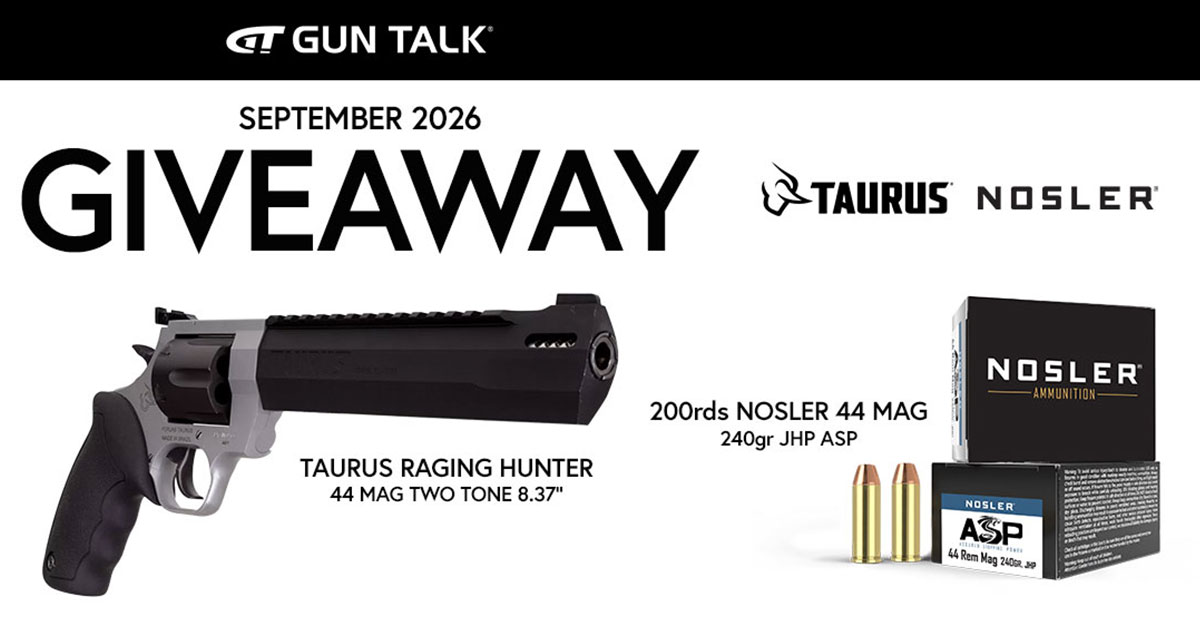
Gun Talk Giveaway
One lucky winner will bring home:
Open to U.S. residents 21+ only. Void where prohibited.